
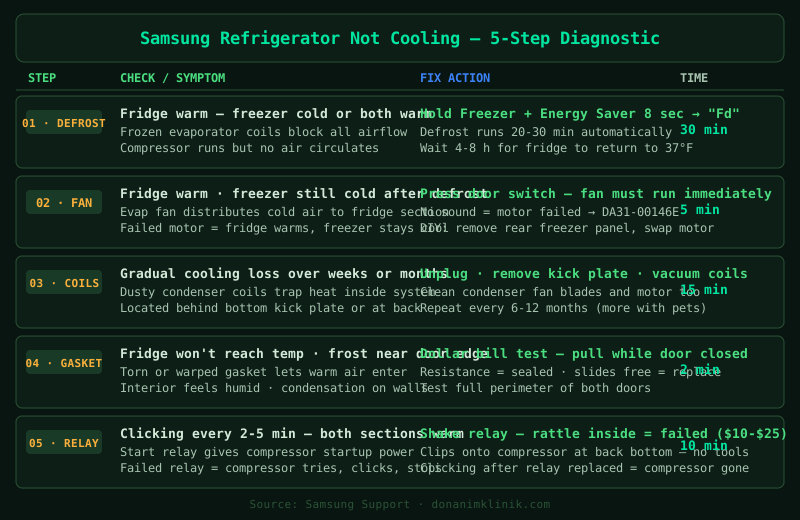
Most Samsung refrigerators that stop cooling have one of four causes: frozen evaporator coils (the defrost system has failed and ice has blocked all airflow), a failed evaporator fan motor (cold air is produced but not distributed into the refrigerator section), clogged condenser coils (the system cannot reject heat), or a failed start relay (the compressor cannot start). Samsung’s own troubleshooting documentation identifies forced defrost as the correct first step because frozen evaporator coils account for the majority of cases and the defrost cycle is completely non-destructive.
What causes a Samsung refrigerator to stop cooling
Frozen evaporator coils — The defrost system is designed to melt frost that accumulates on the evaporator coils during each cooling cycle. When the defrost heater, defrost thermostat, or defrost control fails, frost accumulates until the coils are completely encased in ice. Airflow stops entirely even though the compressor keeps running. This is the most frequent cause of Samsung refrigerators suddenly losing cooling. Forced defrost removes the ice temporarily; the defrost heater or thermostat needs replacement to prevent the coils from freezing again within days.
Evaporator fan motor failure — The evaporator fan motor sits behind the rear panel of the freezer and pulls air through the evaporator coils into both the freezer and refrigerator sections. When the motor fails, the freezer stays relatively cool (it surrounds the evaporator directly) while the refrigerator section warms completely because no air is being circulated. This is the explanation for the specific symptom: Samsung fridge not cooling but freezer works.
Clogged condenser coils — The condenser coils at the bottom front or back of the refrigerator release heat from the refrigerant to the room. Dust and pet hair insulate the coils and reduce heat transfer. The result is a gradual decline in cooling — the refrigerator runs longer cycles but cannot maintain target temperature. Cleaning restores performance in all but the most severe cases.
Start relay failure — The start relay provides the compressor with the surge of current it needs to start each cooling cycle. A failed relay produces a distinctive symptom: a clicking sound every 2 to 5 minutes as the compressor tries to start and fails, with a completely warm interior on both sides.
How to fix Samsung refrigerator not cooling
Work through the steps in order. Step 1 (forced defrost) resolves the most common cause and requires no tools. If the refrigerator returns to temperature after defrost but loses cooling again within 1 to 3 days, the defrost system has failed internally — defrost addressed the symptom but not the cause. In that case, the defrost heater (part DA47-00244B on some Samsung models) or defrost thermostat needs replacement.
How to verify the fix
After running forced defrost, close both doors and leave them closed for 4 hours. Place a thermometer in the refrigerator section. A temperature at or below 37°F (3°C) after 4 hours confirms the defrost resolved the problem. If temperature is not reached after 8 hours with doors kept closed, proceed to Step 2 (evaporator fan test). If the refrigerator cools normally for 1 to 3 days then stops again, the defrost heater or defrost thermostat needs replacement to address the root cause.
Step-by-step fix
Run a forced defrost cycle to clear frozen evaporator coils
Frozen evaporator coils are the most common cause of a Samsung refrigerator not cooling — the coils ice over when the defrost system fails, blocking airflow entirely. On most Samsung French door and side-by-side models (2016 and later): press and hold the Freezer and Energy Saver buttons simultaneously for 8 seconds until all display segments light up. Press the Freezer button repeatedly to cycle through modes until 'Fd' appears on the display. Press Freezer once more to confirm. The defrost cycle runs 20 to 30 minutes and exits automatically. After defrost completes, close the doors and wait 4 to 8 hours — keep doors closed — for the refrigerator section to return to 37°F (3°C). If button locations differ on your model, search your model number plus 'forced defrost mode' on Samsung's support site for the exact sequence.
Test the evaporator fan motor
The evaporator fan motor circulates cold air from the freezer into the refrigerator section. If the motor fails, the freezer remains relatively cold while the refrigerator section warms completely — the most common cause of Samsung refrigerator not cooling but freezer works. To test: open the freezer door and locate the door switch (a small button at the top or side of the door frame). Press and hold the door switch with your finger while listening for the evaporator fan behind the rear panel. On a working refrigerator the fan starts immediately when the switch is pressed. No fan sound means the motor has failed. If the motor is confirmed failed, contact an appliance technician — evaporator fan motor replacement (part DA31-00146E on most Samsung models) is a $150 to $250 service call including parts and labor.
Clean the condenser coils
Condenser coils release heat from the refrigerant to the room. When coils accumulate dust and pet hair, the refrigerator cannot reject heat efficiently and cooling degrades gradually. On most Samsung refrigerators, condenser coils are behind the kick plate at the bottom front. Unplug the refrigerator before cleaning. Remove the kick plate (snaps off on most Samsung models) and use a vacuum cleaner with a brush attachment to remove dust from the coils and the condenser fan blades. This takes 15 minutes and can restore several degrees of cooling when coils are heavily fouled. Samsung recommends cleaning condenser coils every 6 to 12 months, or more frequently in homes with pets.
Inspect the door gasket
A torn, warped, or dirty door gasket allows warm room air into the refrigerator continuously, preventing it from holding temperature. To test: close the door on a dollar bill or piece of paper — you should feel resistance when pulling it out. If it slides out easily, the gasket has lost its seal at that location. Test around the full perimeter of both doors. Also clean the gasket with warm soapy water — a stiff or dirty gasket may seal poorly without being visibly damaged. If the dollar bill test confirms the gasket has failed, replacement is a straightforward job for any appliance technician — typical cost is $80 to $180 including the gasket.
Check and replace the start relay
The start relay gives the compressor the burst of power it needs to start each cooling cycle. When the relay fails, the compressor cannot start and all cooling stops. Symptom: a clicking sound every 2 to 5 minutes as the compressor tries to start and fails, combined with a completely warm interior. To diagnose: unplug the refrigerator and pull the start relay off the compressor — it clips onto the side of the compressor at the bottom rear. Shake the relay next to your ear. A rattling sound inside confirms the relay has failed. Contact an appliance technician with this diagnosis — start relay replacement is a straightforward $80 to $150 service call including parts. If the compressor still does not run after relay replacement, the compressor itself has failed — replacement costs $400 to $800 including labor and requires a certified technician.