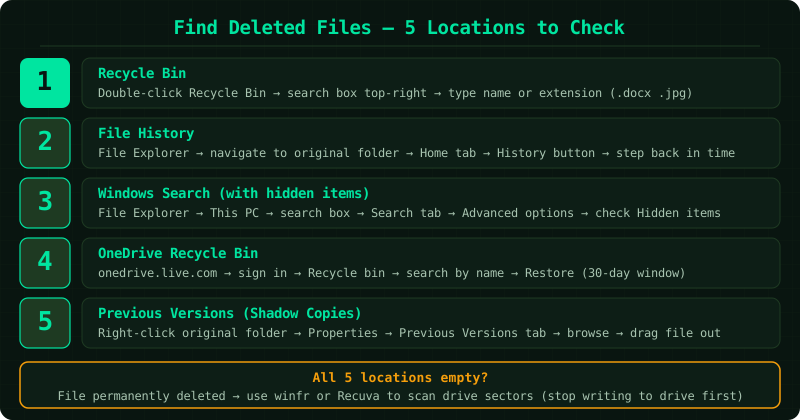
A file that appears missing is not always deleted. Before running any scanning tool, it is worth spending five minutes checking the locations where Windows keeps deleted or moved files — the Recycle Bin, File History backups, the OneDrive Recycle Bin, and shadow copies together cover the majority of cases where files seem to have disappeared.
Work through the steps below in order. Each check takes under two minutes and requires no additional software.
Why files seem to disappear
The most common reasons files are missing on Windows:
Deleted to Recycle Bin — the file is still there, just not in its original folder. The Recycle Bin can hold hundreds of files silently.
Moved by sync software — OneDrive, Dropbox, or Google Drive can move or rename files during sync conflicts without displaying any notification.
Quarantined by antivirus — Windows Defender and third-party antivirus programmes remove files they flag as threats. The file is held in quarantine and can be restored if the detection was a false positive.
Hidden by file attributes — some files are set to hidden by default or by applications. Windows Search does not show hidden files unless you enable the Hidden items option.
Deleted from a location that bypasses the Recycle Bin — USB drives, network shares, and files deleted from Command Prompt go directly to permanent deletion without the Recycle Bin step.
How to confirm a file is actually deleted
If searching the Recycle Bin, File History, OneDrive Recycle Bin, and Previous Versions all return no results, and the file cannot be found anywhere on the computer through Windows Search with Hidden items enabled, the file has been permanently deleted and is no longer accessible through Windows’ normal file system. At that point, a raw-sector scan with Windows File Recovery or Recuva is the next step — these tools look below the file system level for data that has not yet been overwritten.
Frequently Asked Questions
I emptied the Recycle Bin — can I still find the files?
After emptying the Recycle Bin, the files are no longer in any Windows-accessible location. However, the data often remains on the disk in the sectors the files occupied, until new data overwrites it. Use Windows File Recovery (winfr) or Recuva to scan the drive at the sector level. These tools do not 'find' files in the traditional sense — they scan for recognisable patterns of file data in the raw disk sectors and reconstruct files from those patterns.
Why can I not find a file I downloaded recently?
Downloaded files go to the Downloads folder by default: C:\Users\YourName\Downloads. Open File Explorer, click This PC in the left panel, and then open Downloads. If it is not there, check whether the file finished downloading — look in your browser's download history (Ctrl+J in Chrome, Edge, and Firefox). Also check whether a duplicate with a different name exists — some browsers save duplicates as filename (1).pdf, filename (2).pdf, etc. If you moved the download to a different folder, search by the exact filename using Windows Search.
Can I find files deleted a long time ago?
Through normal Windows tools, the Recycle Bin holds files until its size limit is reached or until it is manually emptied — there is no automatic 30-day deletion from the Recycle Bin. File History keeps backups for one month by default (configurable up to forever). Shadow copies are kept until System Protection storage space runs out. If the file was deleted more than a month ago and no backup exists, the only option is a raw-sector scan with winfr or Recuva — success depends entirely on whether those sectors have been overwritten.
How do I find files deleted from an external hard drive?
External drives do not route deletions through the Windows Recycle Bin when deleted directly (the Recycle Bin icon on the desktop only shows files deleted from internal drives in most configurations). To find files deleted from an external drive, use Windows File Recovery: open Command Prompt as administrator and run winfr E: C:\Recovery /extensive /n *.* — replace E: with your external drive letter and C:\Recovery with a folder on a different drive to save results. You can also use Recuva and point it at the external drive during the scan setup.
A file disappeared but I did not delete it — where did it go?
Several things can cause files to disappear without user action. A Windows Update may have moved or renamed a folder. An antivirus programme may have quarantined the file if it was flagged as suspicious — check the antivirus quarantine folder. OneDrive may have moved the file during a sync conflict. An application like CCleaner may have deleted temporary or cached files. To investigate: open Windows Security → Protection history (for antivirus quarantine), check your OneDrive activity log at onedrive.live.com/activity, and search the entire drive including hidden locations using File Explorer's Advanced search options.