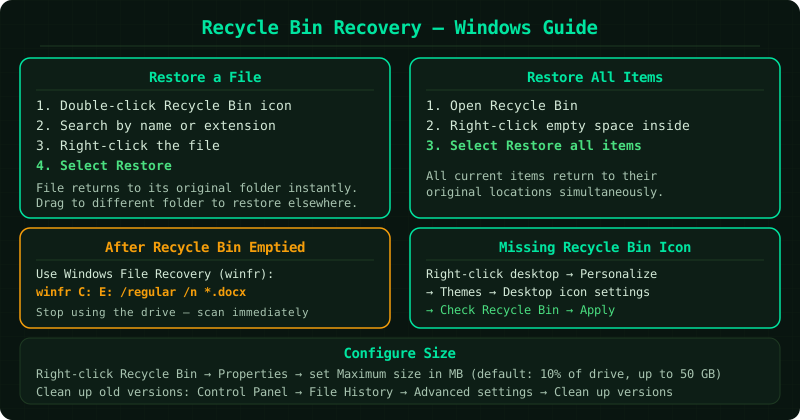
Open the Recycle Bin, right-click the deleted file, and select Restore — the file returns to its original folder instantly. If the Recycle Bin was emptied, use Windows File Recovery or Recuva to scan the drive for the data before it is overwritten.
The Recycle Bin is Windows’ first line of defence against accidental file deletion. Files deleted with the Delete key or by dragging to the Recycle Bin remain there intact until you choose to permanently delete them — they have not left the computer, they have only moved to a holding area.
When the Recycle Bin is emptied, recovery becomes more complex but is still possible in many cases using Windows’ built-in scanning tools.
What the Recycle Bin does and does not protect
Protected by the Recycle Bin: Files deleted with the Delete key from any location on an internal drive. Files dragged to the Recycle Bin icon. Files sent to Recycle Bin via right-click context menu.
Not protected — bypass the Recycle Bin: Files deleted with Shift+Delete. Files deleted from USB drives and external storage. Files deleted from network folders and mapped drives. Files deleted from Command Prompt using the del command. Files larger than the Recycle Bin’s configured maximum size.
How to verify the restoration
After restoring a file, navigate to the folder it was restored to and open the file. Confirm the contents are intact. If you restored a document, scroll through it. If you restored a photo, check it opens at full quality. Files restored from the Recycle Bin are byte-for-byte identical to the originals — the Recycle Bin does not alter file contents. If the file does not open correctly after restoration, the issue predates the deletion.
Frequently Asked Questions
Why are some deleted files not in the Recycle Bin?
Several types of deletions bypass the Recycle Bin entirely: files deleted from USB flash drives and external drives under 500 MB, files deleted from network drives and shared folders, files deleted using the command line (del or rm commands), files deleted with Shift+Delete, and files that exceeded the Recycle Bin's maximum size limit at the time of deletion. For these files, Windows File Recovery or Recuva is required for recovery attempts.
Can I recover files from an emptied Recycle Bin for free?
Yes. Windows File Recovery is free from the Microsoft Store and is published by Microsoft. Recuva by Piriform is also free for personal use and available at piriform.com. Both tools scan the drive at the sector level to find data from deleted files. Neither tool guarantees recovery — success depends on whether new data has been written over the deleted file's sectors since the Recycle Bin was emptied.
How long does the Recycle Bin keep deleted files?
The Recycle Bin does not automatically delete files after a set number of days. Files remain until you empty the Recycle Bin manually, until the Recycle Bin reaches its size limit (at which point Windows removes the oldest items first), or until you delete individual items from within the Recycle Bin. Files that have been in the Recycle Bin for years are still fully restorable with a right-click → Restore.
My Recycle Bin icon has a red X or looks different — what does that mean?
A red X on the Recycle Bin icon typically means the Recycle Bin is corrupted. To fix this: open Command Prompt as administrator and run rd /s /q C:\$Recycle.Bin — this deletes the corrupted Recycle Bin folder. Windows automatically recreates it on the next restart. After restarting, the Recycle Bin icon returns to normal. Note that running this command permanently deletes all files currently in the Recycle Bin — they cannot be recovered afterward.
The Recycle Bin says it is empty, but I can see files inside — why?
This is a display sync issue. The Recycle Bin header shows a cached file count that sometimes falls out of sync with the actual contents. Right-click the Recycle Bin icon on the desktop and select Empty Recycle Bin to force a resync — if it then shows 0 items, the display was incorrect and the Recycle Bin is actually empty. Alternatively, close the Recycle Bin window and reopen it to refresh the display. If files still appear after reopening, they are genuinely present and can be restored normally.