
Laptop slow on startup means the computer takes significantly longer than expected to reach a usable desktop after pressing the power button — either the boot sequence itself is slow, the login screen takes a long time to appear, or the desktop appears but remains unresponsive for minutes while background processes finish loading. According to Microsoft’s official startup management documentation, startup program accumulation is the most common correctable cause of slow Windows 11 startup, while hardware — specifically the type of storage drive — determines the absolute minimum startup time achievable with any software configuration.
What causes a laptop to start slowly
Startup program accumulation — Software installers frequently add a startup entry without making it obvious. After a year of normal software installation, it is common to find 10–20 programs set to launch automatically. Each program claims disk access at the moment the desktop loads, creating a bottleneck where multiple programs compete for the same physical disk resource simultaneously.
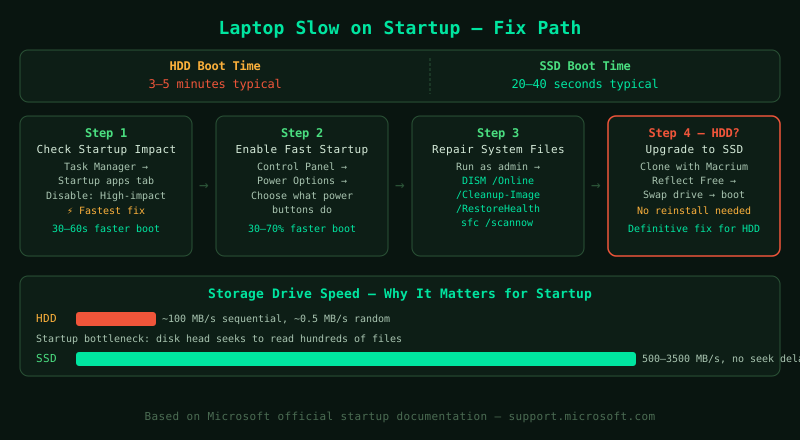
Spinning hard drive (HDD) — An HDD reads startup files by physically moving read heads across spinning magnetic platters. The random read speed is 0.5–1.5 MB/s for typical startup file patterns. An SSD reads the same files at 500–3500 MB/s using electronic memory cells with no moving parts. This speed difference is the primary reason HDD-based computers can take 3–5 minutes to boot even after software optimisation.
Fast Startup disabled — Fast Startup reduces boot time by saving the Windows kernel state on shutdown and reloading it on the next boot, bypassing the kernel initialisation phase. When Fast Startup is disabled — which some users do intentionally or which Windows Update occasionally resets — boot time increases by 30–70%.
Corrupted system files — Corrupted Windows system files force the boot process to spend extra time on error recovery and repair checks, adding significant time to startup in some cases.
How to fix a slow startup
Work through the steps in order. Step 1 (disabling startup apps) and step 2 (enabling Fast Startup) typically provide immediate improvement. Step 5 (SSD upgrade) is necessary if the storage drive is an HDD and startup time is still above 90 seconds after the software fixes.
How to verify the fix
After completing each step, restart the computer and time the startup from pressing the power button to the moment you can click an application icon and have it respond. A healthy Windows 11 startup on an SSD should be 20–40 seconds. On an HDD with startup programs disabled, expect 60–90 seconds. Open Task Manager > Performance > Disk immediately after login to confirm disk usage drops below 50% within 2 minutes of reaching the desktop.
Known limitations
Software optimisations cannot make an HDD boot as fast as an SSD — the physical read speed of the drive determines the minimum boot time, and no software setting changes that. On a computer with 4 GB RAM, even after startup programs are disabled, Windows 11’s own memory requirements may cause swapping to the page file during boot, adding to startup time. The most reliable long-term fix for startup that remains slow after software optimisation is an SSD upgrade, which also improves application launch times and general responsiveness throughout the session.