
PC slow after a Windows update describes a specific pattern: the computer performs normally before an update, slows down immediately after the update and restart, and either gradually returns to normal speed or remains slow. According to Microsoft’s official Windows Update documentation, the post-update period involves several mandatory background processes that run with high priority and temporarily dominate CPU and disk resources before completing and releasing those resources.
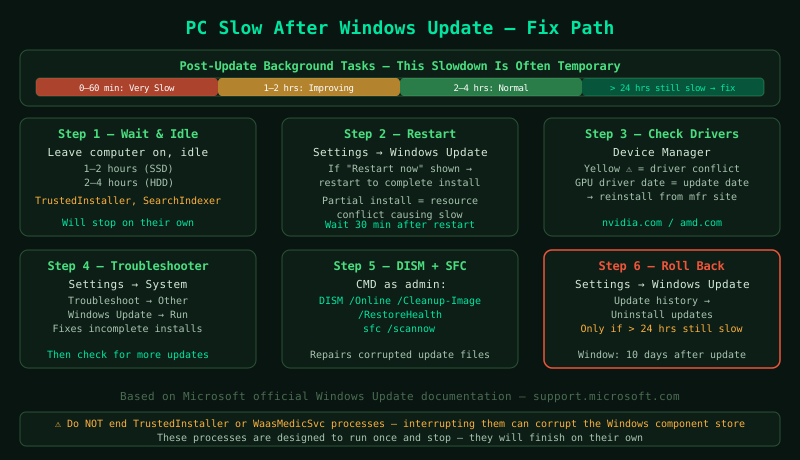
What causes a PC to slow down after a Windows update
Post-update background processing — After a Windows update installs and the computer restarts, Windows runs TrustedInstaller (component store cleanup), SearchIndexer (search database rebuild), SysMain (memory map update), and Delivery Optimization (distributing update files to other devices on the network). These tasks have high disk and CPU priority and run for 30–120 minutes, making the system noticeably sluggish during this window.
Driver replacement — Windows updates can replace installed hardware drivers with versions bundled in the update package. If the bundled driver is older than the driver previously installed, or if it has a compatibility issue with specific hardware, performance degradation or device instability can result.
Power management changes — Some Windows updates modify power plan settings or introduce new power management features that change CPU frequency scaling behaviour, potentially causing the CPU to throttle more aggressively than it did before the update.
Corrupted update installation — If the update download or installation was interrupted (power loss, forced restart, network drop during update), the resulting partial installation can leave system components in an inconsistent state, causing ongoing instability rather than the temporary post-update background processing pattern.
How to fix a slow PC after a Windows update
Start with step 1 — most post-update slowdowns are temporary and resolve without intervention. If performance has not improved after 24 hours, proceed through the remaining steps.
How to verify the fix
After applying fixes, open Task Manager > Performance and observe CPU and Disk at idle. If no Windows Update processes (TrustedInstaller, TiWorker, SearchIndexer, WaasMedicSvc) appear in the top 10 CPU or Disk consumers, the post-update background tasks have completed. Test the performance of the tasks that were slow before — application launch times, web browsing, file operations — and compare with the pre-update experience.
Known limitations
Some Windows updates permanently change system behaviour in ways that affect performance on specific hardware configurations. When this happens, rolling back the update or using System Restore is the only way to restore the previous performance level, as the change is not caused by temporary background processing but by a deliberate change to Windows configuration or the hardware driver stack. Microsoft typically releases follow-up updates that address driver compatibility issues reported after major updates — checking Windows Update for available updates after the problematic update sometimes applies a compatibility fix automatically.