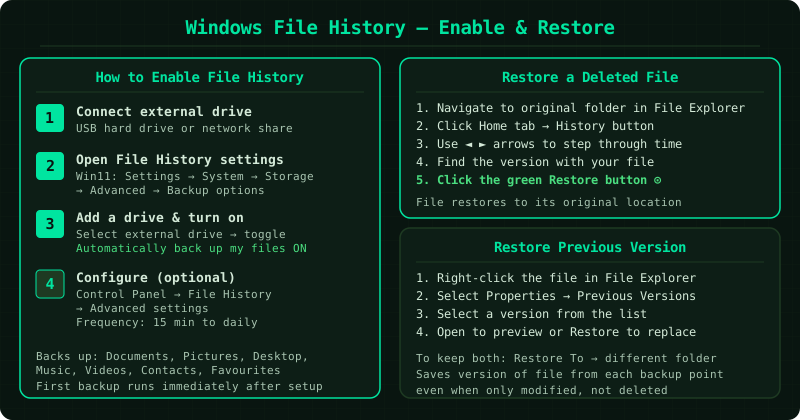
File History is Windows’ continuous backup feature. Once turned on with an external drive connected, it silently copies every change to files in your Documents, Pictures, Desktop, and other key folders — every hour by default. When a file is accidentally deleted or overwritten, you can step backward through time and restore the exact version you need.
Unlike recovery tools that scan for deleted data, File History restores from a complete, intact copy. There is no uncertainty about whether the data is still there — if it was backed up, it is recoverable in full.
File History vs Windows Backup — which is which
File History (this guide) backs up files in your libraries continuously while you work. It is designed for recovering individual files and previous versions.
Windows Backup / System Image backs up the entire Windows installation, including the operating system, applications, and all files. It is designed for recovering from a complete system failure or hard drive replacement.
Both can be active simultaneously. File History is the faster and more flexible option for individual file recovery. A system image backup is the safety net for catastrophic drive failure.
How to verify the fix
After restoring a file or folder from File History, open it and confirm the contents are correct. If you restored a previous version of a document, compare it with the current version to ensure you retrieved the right point in time — use the Open option before Restore to preview the version first. File History backups are complete, uncompressed copies of the original files, so a successful restore produces a file identical to the backed-up version.
Frequently Asked Questions
How much space does File History use?
File History uses as much space as the number and size of files being backed up, multiplied by the number of versions kept. If you have 50 GB of documents and keep 1 month of versions at hourly backups, File History may use several hundred GB over time. You can manage this in Control Panel → File History → Advanced settings → Clean up versions — select a time period and click Clean up to delete old versions and free space. A 1 TB external drive is a comfortable size for most home users keeping one month of history.
Does File History back up the whole computer?
No. File History backs up files in specific libraries and folders: Documents, Music, Pictures, Videos, Desktop, Contacts, and Favourites. It does not back up Windows system files, installed programs, or files in locations outside these libraries unless you add them manually. For a complete backup of the entire system (including Windows and all programs), use Windows Backup in Control Panel → Backup and Restore (Windows 7) which creates a system image.
I turned on File History after I deleted the file — can I still restore it?
No. File History only backs up files from the moment it is enabled. It cannot recover a file that was deleted before File History started running because there was no backup copy created. For files deleted before File History was running, use Windows File Recovery or Recuva to scan the drive for recoverable data.
File History says it cannot find the backup drive — what should I do?
Reconnect the external drive and check that Windows recognises it in File Explorer. If the drive letter changed, File History may not recognise it — open Control Panel → File History and click Select drive to repoint it to the correct drive letter. If the drive has been used on another computer, ensure it is formatted as NTFS (right-click the drive in File Explorer → Properties to check the file system). Exiting File History and restarting the service (services.msc → File History Service → Restart) resolves most connection errors.
Can I access File History backups on a different computer?
Yes, with limitations. If you take the backup drive to another Windows computer, connect it and open Control Panel → File History → Restore personal files. On Windows, you can browse the backup drive manually: it stores backups in a folder named FileHistory on the destination drive, organised by username and computer name. You can copy files directly from this folder without using the File History interface, though the version navigation UI will not be available unless the destination computer's File History is configured to use the same backup drive.