
Windows File Recovery is a free command-line tool published by Microsoft in the Microsoft Store. It can recover files deleted from the Recycle Bin, permanently deleted files, and files from formatted or corrupted drives. It works by scanning the raw sectors of a drive for file data that Windows has marked as deleted but not yet overwritten — unlike the Recycle Bin, which only works for files that were moved there, winfr searches at the disk level.
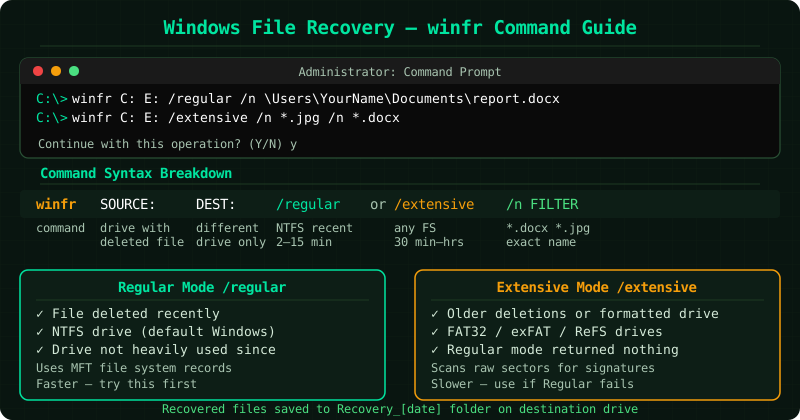
What Windows File Recovery can and cannot do
Can recover: Recently deleted files on NTFS drives (Regular mode), older deleted files and files from formatted drives (Extensive mode), files deleted with Shift+Delete, files from external hard drives and USB drives, files in FAT32 and exFAT format (Extensive mode only).
Cannot recover: Files on SSDs where TRIM has already zeroed the sectors, files on drives that have been heavily written to since deletion, files from drives with physical damage, files on BitLocker-encrypted drives without the decryption key.
When to use Regular mode vs Extensive mode
Regular mode (/regular) uses the NTFS file system records to locate deleted entries. It is faster (2–15 minutes) and more accurate when the deletion is recent. Use it first.
Extensive mode (/extensive) ignores file system records and searches for file type signatures directly in the raw sectors. It takes longer (30 minutes to several hours) but finds files Regular mode misses — especially on drives that have been formatted or used heavily after deletion. Use it if Regular mode returns no results.
How to verify the fix
Open each recovered file immediately to confirm its contents. A file that appears in the Recovery folder may be partially overwritten — it will open but display incomplete or corrupted content. Only files that open fully intact should be considered successfully recovered. Move confirmed files to a permanent location on a different drive from the one that was scanned.
Known limitations
winfr cannot improve results on an SSD where TRIM has executed. Consumer SSDs typically issue TRIM commands within seconds to minutes of file deletion. Enterprise SSDs and some older consumer drives may disable or delay TRIM, giving a wider recovery window. To check whether TRIM is active on your drive: open Command Prompt as administrator and run fsutil behavior query DisableDeleteNotify — a result of 0 means TRIM is enabled.