
No audio output device is installed is a Windows 11 error shown when you hover over the speaker icon in the taskbar — the icon displays a red X and Sound settings shows no output devices available. According to Microsoft’s official audio troubleshooting documentation, this error occurs when the audio driver is missing or corrupted, the audio device is disabled in Device Manager, or a Windows update replaced the manufacturer driver with an incompatible generic version.
What causes “No audio output device is installed” on Windows 11
Missing or corrupted audio driver — The audio driver is the software that allows Windows to communicate with the audio hardware. If the driver is missing, corrupted, or incompatible, Windows cannot detect the audio device and reports no output device is installed.
Windows Update replaced the driver — Windows Update sometimes installs a generic Microsoft High Definition Audio driver over a working manufacturer-specific driver. The generic driver may not include the correct hardware identifiers for the specific audio chip, causing the device to appear as unknown or undetected.
Audio device disabled in Device Manager — An audio device can be manually disabled in Device Manager or disabled by certain software installation processes. A disabled device does not appear in Sound settings and triggers the no audio output device error.
Corrupted Windows system files — Windows audio components depend on system DLLs and service files. If these files are corrupted — by an incomplete update, malware, or disk errors — the audio subsystem fails to initialise and the audio device becomes unavailable.
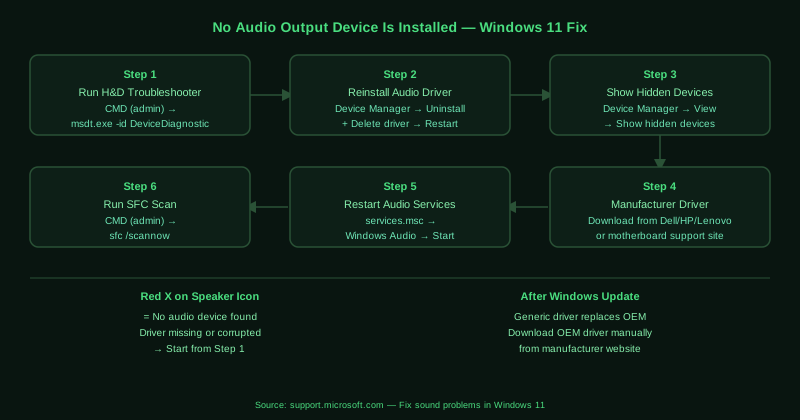
How to fix “No audio output device is installed” on Windows 11
Work through the steps in order. Steps 1 and 4 (troubleshooter and manufacturer driver) resolve the majority of cases.
How to verify the fix
After each step, hover over the speaker icon in the taskbar — if the red X is gone, the audio device has been detected. Open Sound settings and confirm an output device appears under Output. Play audio through a browser to verify sound is working. If the device appears but produces no sound, check volume levels and the selected output device.
Known limitations
Microsoft’s Hardware and Devices troubleshooter and driver reinstall process cannot restore audio on a system with a physically failed audio chip. If the motherboard audio chip has failed — due to age, electrical damage, or manufacturing defects — no driver installation resolves the error. The audio chip must be repaired or replaced, or a USB audio adapter used as an alternative. Additionally, some OEM laptop audio chips require a proprietary driver that is only available from the laptop manufacturer and cannot be sourced from Windows Update or generic audio driver packages — if the manufacturer no longer provides Windows 11 drivers for an older laptop model, the audio device may remain undetectable on Windows 11.