No sound on Windows 11 means audio is completely absent — speakers and headphones produce no output, the volume slider has no effect, or the speaker icon in the taskbar shows a red X. According to Microsoft’s official audio troubleshooting documentation, the most common causes are the wrong output device selected in Sound settings, a stopped Windows Audio service, or a corrupted audio driver following a Windows update.
What causes no sound on Windows 11
Wrong output device selected — Windows 11 automatically switches the default audio output when new devices are connected. Plugging in a monitor with HDMI audio, a USB headset, or a Bluetooth speaker can silently redirect all audio to the new device, leaving the original speakers or headphones silent.
Windows Audio service stopped — The Windows Audio and Windows Audio Endpoint Builder services manage all sound output. These services occasionally stop after sleep or hibernation without warning, causing immediate and complete audio loss.
Corrupted or missing audio driver — Windows updates can replace manufacturer-specific audio drivers with generic versions that do not fully support the hardware. This is the most common cause of audio loss immediately after a Windows Update.
Audio device disabled — Device Manager allows audio devices to be disabled, either manually or by certain installation processes. A disabled device produces no audio and may not appear in Sound settings.
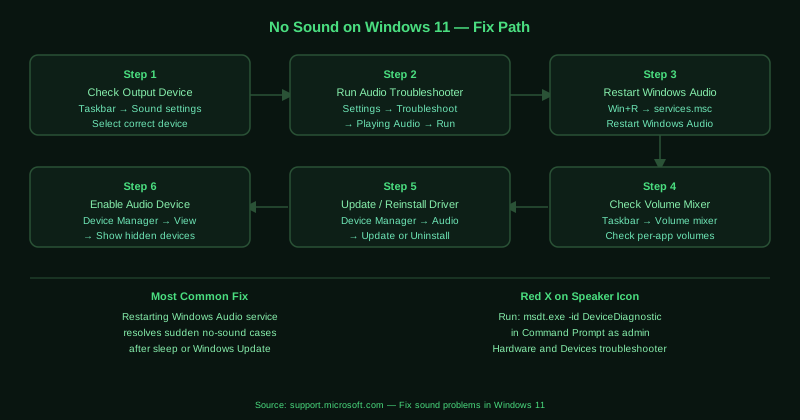
How to fix no sound on Windows 11
Work through the steps in order. Steps 1 and 3 resolve the majority of cases.
How to verify the fix
After each step, open a browser and play any video — YouTube is a reliable test. If audio plays at normal volume, the fix worked. If you hear audio from speakers but not headphones (or vice versa), the output device is set incorrectly — return to step 1 and select the correct device in Sound settings.
Known limitations
Microsoft’s audio troubleshooter does not detect hardware failures — a physically damaged speaker, a broken headphone jack, or a blown audio chip on the motherboard will pass all software diagnostics while producing no sound. If all software fixes fail and audio works on a different output device (such as Bluetooth headphones), the built-in audio hardware may have a physical fault that requires repair or replacement.
Frequently Asked Questions
Why did sound stop working after a Windows 11 update?
Windows updates sometimes replace manufacturer audio drivers with generic Microsoft drivers that do not fully support the hardware. This causes sudden audio loss immediately after an update completes. Open Device Manager, right-click your audio device under Sound, video and game controllers, and select Update driver. If that does not restore audio, download the audio driver directly from your laptop or motherboard manufacturer's website and install it manually.
Why does Windows 11 play sound through the wrong device?
Windows 11 automatically switches the default output device when new audio hardware is connected. A newly plugged-in HDMI monitor, USB headset, or Bluetooth speaker can become the default without you choosing it. Right-click the speaker icon in the taskbar, select Sound settings, and choose your intended output device under the Output section.
Why does sound work in some apps but not others on Windows 11?
App-specific audio failure usually means the application has its own volume setting muted in the volume mixer, or the app is sending audio to a different output device than your system default. Right-click the taskbar speaker icon and select Open volume mixer to check individual app volumes. Some apps — particularly browsers and communication apps — also have their own audio output settings within the app.
How do I fix Windows 11 audio after a system restore?
System restore can revert audio drivers to an older version. After a system restore, open Device Manager and update the audio driver. If the driver update does not resolve audio, download the latest audio driver from your laptop or motherboard manufacturer's website. The restored driver version may not be compatible with the current Windows 11 build.
Why does the speaker icon in the taskbar show a red X on Windows 11?
A red X on the speaker icon means Windows cannot find any audio output device. This happens when the audio driver is corrupted, the audio device is disabled in Device Manager, or a Windows update removed the driver. Open Device Manager and check Sound, video and game controllers for a missing or disabled audio device. If no audio device appears at all, run the Hardware and Devices troubleshooter from Command Prompt: msdt.exe -id DeviceDiagnostic