Microsoft Teams audio not working — whether you cannot hear other participants, they cannot hear you, or audio cuts out during meetings — is almost always caused by the wrong audio device being selected in Teams or by Windows blocking Teams’ access to your microphone. According to Microsoft’s Teams troubleshooting documentation, using the Make a test call button in Teams Settings resolves the majority of Teams audio failures in under two minutes.
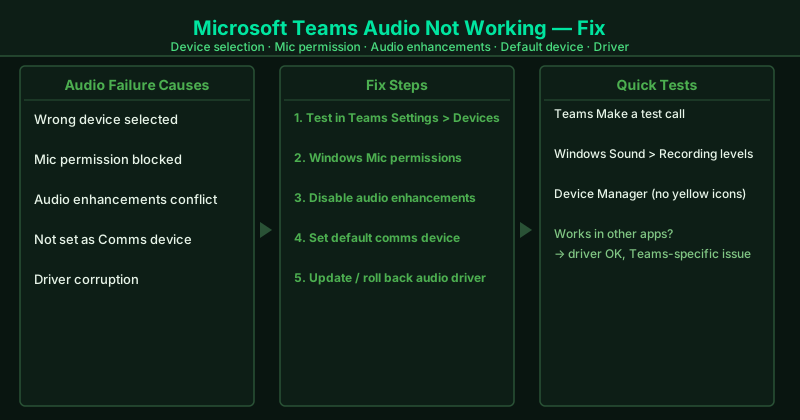
What causes Microsoft Teams audio to stop working
Wrong device selected in Teams — When you connect a new headset, USB audio device, or Bluetooth headset, Windows may set it as the new default playback device while Teams continues using the previously selected device. Teams does not automatically switch to newly connected devices — you must manually select the new device in Teams Settings > Devices.
Windows microphone permissions blocked — A Windows Update, a privacy settings change, or a Teams reinstall can revoke Teams’ microphone access without any visible notification. When this happens, Teams receives no microphone input — the level bar shows no movement and other participants hear nothing from you, even though the microphone works perfectly in other applications.
Audio enhancements conflict — Windows audio enhancements process audio at the driver level before Teams receives it. When both Windows and Teams apply noise cancellation, echo reduction, or equalization simultaneously, the combined processing causes artifacts — robotic voices, intermittent dropouts, or complete silence.
Default Communication Device mismatch — Windows maintains two separate audio routing paths: Default Playback Device (used by music and video) and Default Communication Device (used by calls and meetings). Teams routes audio through the Default Communication Device. When these are set to different hardware, Teams sends and receives audio through a different device than expected.
Outdated or corrupted audio driver — Audio drivers manage the interface between Windows and your audio hardware. A corrupted or outdated driver causes audio failures that cannot be resolved by changing settings — the driver itself must be updated or reinstalled.
How to fix Microsoft Teams audio not working
Work through the steps in order. Step 1 takes under two minutes and immediately identifies whether the problem is inside Teams or in Windows.
How to verify the fix
After completing each step, return to Teams Settings > Devices and click Make a test call. The test call plays a tone through your speaker — you should hear it clearly. It then records five seconds of audio from your microphone and plays it back — you should hear your own voice. If both tests pass, join a live Teams call or meeting to confirm audio works end-to-end with other participants.
Frequently Asked Questions
Teams audio works for one person in the meeting but not others.
When audio works for some participants but not others in the same meeting, the issue is with the specific participant who cannot be heard or cannot hear. Each participant's audio travels through their own local microphone and speaker setup. The participant experiencing the problem should open Teams Settings > Devices and run Make a test call to confirm whether their speaker and microphone are working. Selecting the correct device in that participant's Teams settings resolves most asymmetric audio problems.
I can hear others in Teams but they can't hear me.
This pattern — hearing others but not being heard — points specifically to a microphone access or selection problem on your end. Check two things: first, open Teams Settings > Devices and confirm the correct microphone is selected and that the microphone level bar shows movement when you speak. Second, go to Windows Settings > Privacy & Security > Microphone and confirm Let desktop apps access your microphone is On. If the microphone bar shows no movement even with the correct device selected, another application may have exclusive control of the microphone — close Teams, Skype, Zoom, and Discord, then reopen Teams alone.
Teams audio was working and then stopped during the meeting.
Audio dropping mid-meeting is most commonly caused by a Bluetooth device disconnecting briefly, a USB audio device being unplugged or power-cycled, or Windows reassigning the default audio device while the meeting is in progress. During the meeting, click the three dots (More actions) menu, select Device settings, and reselect your speaker and microphone from the dropdowns. Teams will switch audio devices without dropping the call. If this happens repeatedly with a USB headset, try a different USB port — USB hubs with insufficient power cause intermittent disconnections.
Teams microphone shows activity but my voice is not heard.
A moving microphone level indicator in Teams means Teams has access to your microphone and is receiving audio — but other participants still cannot hear you. This is typically a network or meeting-level issue rather than a device problem. Check that you are not muted at the meeting level: confirm the microphone icon in the Teams meeting toolbar is not showing a slash. Also check if the meeting organizer has muted all participants — click the microphone icon to request unmuting. If you are not muted and others still cannot hear you, leave the meeting and rejoin.
My Bluetooth headset audio does not work in Teams.
Bluetooth headsets with a microphone appear as two separate devices in Windows: a high-quality stereo audio device (for music) and a lower-quality Hands-Free Profile (HFP) device that includes the microphone. Teams must use the HFP device to access the Bluetooth microphone — selecting the stereo Bluetooth device in Teams provides speaker audio only. In Teams Settings > Devices, select the Bluetooth device that includes 'Hands-Free' or 'HFP' in its name for both speaker and microphone. If the HFP device does not appear, re-pair the headset and ensure it is paired as a headset, not just an audio device.