
Microsoft Teams connection problems — showing “We couldn’t connect,” failing to join meetings, or disconnecting repeatedly — are most commonly caused by a Microsoft 365 service incident, a firewall rule blocking Teams’ required ports, a VPN routing Teams traffic through an incompatible path, or a corrupted local network configuration. According to Microsoft’s Teams connectivity documentation, checking the Microsoft 365 service health page first eliminates service-side incidents before any local troubleshooting is attempted.
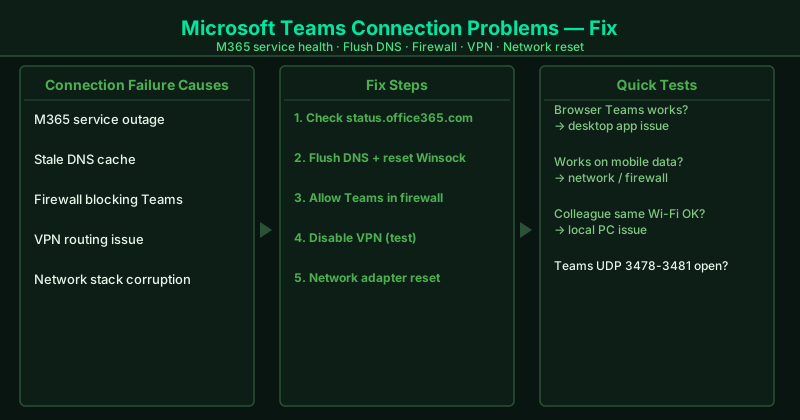
What causes Microsoft Teams connection problems
Microsoft 365 service incident — Teams is a cloud service running on Microsoft’s Azure infrastructure. When Microsoft experiences an outage or degradation in the Teams service, all users are affected simultaneously and no local fix can restore connectivity. Checking the service health page before troubleshooting saves significant time.
Firewall blocking Teams ports — Teams requires specific outbound ports to function: TCP port 443 for signaling and authentication, and UDP ports 3478–3481 for real-time audio and video media. A Windows Firewall rule, a third-party firewall, or a network-level firewall that blocks these ports produces “We couldn’t connect” errors identical to a complete network failure.
VPN routing conflict — VPN services route all traffic — including Teams real-time media — through a VPN server. VPN tunnels add latency, reduce available bandwidth, and can block UDP traffic entirely. Microsoft Teams’ media quality degrades significantly when routed through VPN, and some VPN configurations block Teams entirely. Microsoft recommends split tunneling specifically for Teams traffic.
Corrupted DNS cache — Teams connects to Microsoft’s servers by resolving DNS hostnames such as teams.microsoft.com and *.teams.microsoft.com. When the local DNS cache contains stale or incorrect entries for these hostnames — due to a network change, an ISP update, or a previous failed connection — Teams cannot resolve the server addresses and fails to connect.
Network stack corruption — The Windows TCP/IP stack and Winsock catalog can become corrupted after driver updates, software installations, or system errors. A corrupted network stack causes selective connectivity failures — some applications work while Teams cannot connect — because different applications use different network APIs, and the corruption may affect only specific API calls Teams relies on.
How to fix Microsoft Teams connection problems
Work through the steps in order. Step 1 takes under two minutes and determines whether further local troubleshooting is needed at all — if a Microsoft service incident is active, all other steps are unnecessary until the incident is resolved.
How to verify the fix
After completing the relevant steps, open Teams and send a message in a chat. Then join a meeting and confirm audio and video work correctly. Check that the Teams status indicator in the bottom-left corner shows “Connected” rather than an error state. For persistent connection monitoring, go to Teams Settings > Privacy and enable the diagnostic log option so any recurring failures generate logs you can share with IT support.