Microsoft Teams camera not working means Teams shows a black preview, displays “No camera found,” or presents a frozen image when you turn on your video in a meeting. According to Microsoft’s Teams troubleshooting documentation, most camera failures in Teams are caused by another application holding exclusive camera access, a Windows privacy setting blocking Teams, or a corrupted webcam driver.
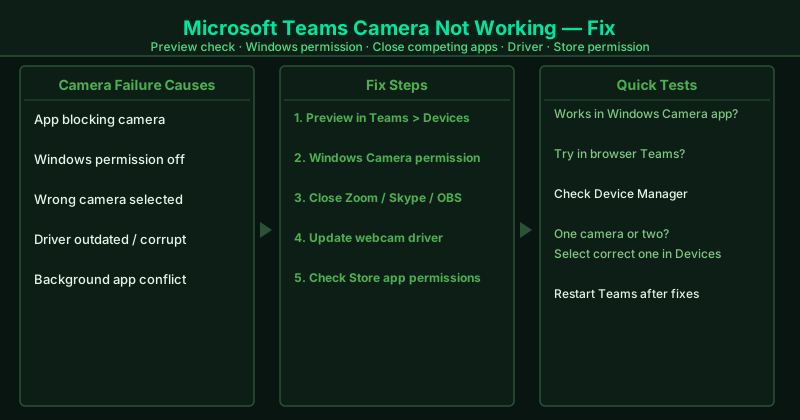
What causes Microsoft Teams camera to stop working
Another application holding exclusive camera access — On Windows, most consumer webcams allow only one application to access the camera at a time. When Zoom, Skype, WhatsApp, OBS, or a browser tab with an active video call is running, Teams receives a black frame or an explicit “camera in use” error. The competing application does not need to be in the foreground — it only needs to be running.
Windows camera permissions blocked — Windows 10 and 11 include privacy controls that can block individual applications from accessing the camera. A Windows Update, a privacy settings change, or a Teams reinstall can revoke Teams’ camera access. When this happens, Teams sees no camera at all — the preview is absent and the camera dropdown may show no devices.
Corrupted or outdated webcam driver — Webcam drivers manage the interface between Windows and the camera hardware. A driver corrupted by a Windows Update or a failed driver installation causes the camera to appear in Device Manager but fail to provide a working image. The Windows Camera app may work while Teams shows black, because each application interacts with the driver differently.
Hardware acceleration conflict — Teams uses GPU hardware acceleration to render its interface and process video. On certain GPU configurations, hardware acceleration causes the camera preview to fail or display a black screen, even though the camera driver and Windows permissions are both correct.
Wrong camera selected in Teams — On systems with both an integrated webcam and an external USB camera, Teams may default to the wrong camera — particularly after a USB device is plugged in or unplugged. The Teams camera dropdown must explicitly point to the intended device.
How to fix Microsoft Teams camera not working
Work through the steps in order. Step 1 takes under one minute and immediately confirms whether Teams has camera access at all.
How to verify the fix
After each step, open Teams Settings > Devices and check the Camera preview window. A live, moving image in the preview confirms Teams has full camera access. To verify the camera works in a real meeting, click your profile picture > Settings > Devices and confirm the preview shows your face clearly, then join a Teams test call or create a brief test meeting with a colleague to confirm your video appears to others.
Frequently Asked Questions
Teams camera shows a black screen but works in Windows Camera app.
When the Windows Camera app shows a working image but Teams shows black, another application is holding exclusive access to the camera, or Windows camera permissions for desktop apps are Off. First, close all other applications that use a camera — check Task Manager to confirm they are fully closed, not just minimized. Then go to Windows Settings > Privacy & Security > Camera and confirm Let desktop apps access your camera is On. After making this change, restart Teams completely before testing.
Teams says 'Camera is being used by another application' but no other app is open.
This error appears when another process holds the camera handle even if no visible application is open. Browser tabs with active video calls (Google Meet, Zoom web, Cisco Webex) are the most common hidden cause — they continue holding camera access even when the browser window is minimized. Open Task Manager and look for browser processes (chrome.exe, msedge.exe, firefox.exe) — close the browser entirely, not just the tab. Also check for communication apps running in the system tray. After closing everything, wait 10 seconds before opening Teams.
My camera worked in Teams yesterday but shows black screen today after a Windows update.
Windows Updates can reset camera privacy permissions, update webcam drivers to incompatible versions, or change how Windows routes camera access to applications. Check two things immediately: first, go to Settings > Privacy & Security > Camera and confirm Let desktop apps access your camera is still On — Windows Updates occasionally reset this. Second, open Device Manager > Cameras and check if your webcam shows a yellow warning icon, which indicates a driver problem introduced by the update. If a warning icon appears, right-click > Properties > Driver tab > Roll Back Driver.
Teams camera shows a frozen or blurry image.
A frozen image means Teams captured one frame from the camera but stopped receiving new frames — the camera connection was established but then interrupted. A blurry image means the camera's autofocus is struggling or the resolution is set too low. For a frozen image, go to Teams Settings > Devices and switch to a different camera in the dropdown, then switch back — this forces Teams to re-initialize the camera connection. For blurry images, clean the camera lens with a microfiber cloth. If the image is frozen consistently, update the webcam driver or try a different USB port for external cameras.
I have two cameras — how do I choose which one Teams uses?
Open Teams Settings (gear icon) > Devices and scroll to the Camera section. The Camera dropdown lists all cameras that Windows has detected. Select the camera you want Teams to use — the preview window updates immediately to show that camera's view. Teams saves this selection and uses it for all future calls and meetings until you change it again. If a camera does not appear in the dropdown, it is not being detected by Windows — check Device Manager > Cameras to confirm the device appears there with no yellow warning icon.