Zoom camera not working — showing a black screen, a frozen image, or the error “Camera is being used by another application” — is most commonly caused by another application holding exclusive control of the camera, Windows privacy settings blocking Zoom’s camera access, or a webcam driver that became incompatible after a Windows Update. According to Zoom’s official video troubleshooting documentation, checking the camera preview in Zoom Settings > Video immediately reveals whether Zoom can access the camera at all.
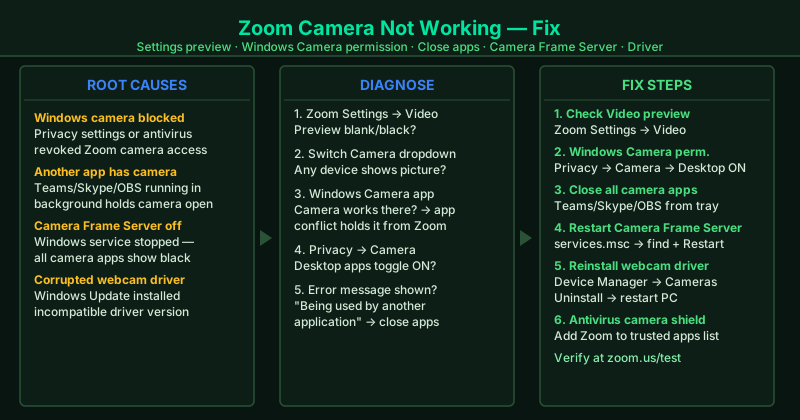
What causes Zoom camera to stop working
Windows camera permissions blocked — Windows 10 and 11 require explicit permission for each application to access the camera. A Windows Update, a privacy tool, or an antivirus camera-protection feature can revoke Zoom’s camera access without any visible notification, causing Zoom to show a black screen.
Another app holding the camera — Most webcams and built-in laptop cameras allow only one application to use them at a time. When Microsoft Teams, Skype, Discord, OBS, or any other app opens the camera — even while running minimized in the background — Zoom cannot access it and displays a black screen or an “in use” error.
Windows Camera Frame Server stopped — The Camera Frame Server service manages camera access for all applications on Windows 10 and 11. When this service stops running, every camera application shows a black screen simultaneously, even though the camera hardware is physically working.
Outdated or corrupted webcam driver — Camera drivers occasionally become corrupted after Windows Updates. A corrupted driver causes the camera to fail in all apps, or specifically fail in Zoom while other apps appear to work — a symptom of a partial driver failure where basic access works but the frame delivery pipeline is broken.
Antivirus camera shield blocking Zoom — Security software with webcam protection blocks all unauthorized camera access. If Zoom is not on the software’s trusted list, every Zoom video session is silently blocked at the driver level.
How to fix Zoom camera not working
Work through the steps in order. Step 1 takes under 30 seconds and directly confirms whether Zoom can access any camera device on your system.
How to verify the fix
In Zoom Settings > Video, the camera preview should show a live picture of yourself. Then join a test meeting at zoom.us/test and confirm your video appears in the preview window before clicking “Join with Video.” Ask a colleague to confirm they can see your video feed once inside the meeting.
Frequently Asked Questions
Zoom camera black screen but the Windows Camera app works fine.
When the Windows Camera app works but Zoom shows a black screen, another application is holding the camera in exclusive use — preventing Zoom from opening it. Close all communication apps running in the background (Teams, Skype, Discord, OBS). If the black screen persists, the Windows Camera Frame Server service may need to be restarted (Step 4). A corrupted Zoom video driver cache can also cause this — uninstall and reinstall Zoom as a last resort.
Zoom camera worked before a Windows Update and now shows black screen.
Windows Updates frequently install new camera driver versions that reset camera permissions or introduce compatibility issues. After an update, check two things: first, go to Settings > Privacy & Security > Camera and confirm desktop apps still have access. Second, open Device Manager > Cameras and check for a yellow warning icon on your webcam — if present, the new driver is incompatible. Roll back the driver by right-clicking the device > Properties > Driver tab > Roll Back Driver.
Zoom says 'Camera is being used by another application' but I closed everything.
Some applications continue running camera processes even after their visible window is closed. Check the system tray (bottom-right corner of taskbar, click the ^ arrow) for Teams, Skype, OBS, or any video conferencing app. Right-click their tray icons and select Quit or Exit — not just Close. If you cannot identify which app holds the camera, open Task Manager (Ctrl+Shift+Esc), go to the App History tab, and look for recent camera usage by application name.
My external USB webcam is not detected in Zoom at all.
If your external webcam does not appear in Zoom's Camera dropdown, Windows is not recognizing the device. Open Device Manager and check for the webcam under Cameras or Imaging devices. If it shows with a yellow warning icon, the driver failed to install — right-click and select Update driver. If it does not appear at all, try a different USB port (preferably a USB 3.0 port on the back of the PC, not a hub), and try a different USB cable. Some webcams also require you to install the manufacturer's driver from their website rather than relying on Windows' generic driver.
Zoom camera is working but the video looks frozen or the frame rate is very low.
A frozen or very low frame-rate camera in Zoom is caused by insufficient USB bandwidth (too many devices on the same USB hub), a slow CPU struggling with video encoding, or a poor-quality connection cable. If you are using a USB hub, connect the webcam directly to the computer. Also check Zoom Settings > Video > Camera Control and ensure HD is enabled — paradoxically, disabling HD can sometimes reduce the frame rate on certain webcams. Update the webcam driver if the issue persists after trying these steps.