
Hard drive not detected means a connected internal or external hard drive is invisible — either not showing in the Windows BIOS at startup, absent from Device Manager, or missing from Disk Management. The drive may not spin up at all, or it may power on but fail to communicate with the computer. According to Microsoft’s disk management documentation, hard drive detection failures fall into two distinct categories: hardware-level failures (not detected in BIOS) and driver or configuration failures (detected in BIOS but not in Windows).
What causes a hard drive not to be detected
Loose or failed SATA data cable — The SATA cable carries data between the hard drive and the motherboard. A loose connection, particularly on the smaller motherboard connector, causes intermittent or complete detection failure.
Insufficient power — Hard drives require consistent 5V and 12V power from the power supply. A failing power supply or a shared power connector delivering insufficient current prevents the drive from spinning up.
Uninitialised disk — New hard drives shipped without partitions or drives previously used in a different system may appear in Disk Management as Unknown and require initialisation before Windows can use them.
Outdated storage controller driver — The chipset driver that controls the SATA or NVMe controller is out of date or was replaced by a generic version after a Windows update.
Failed drive — Hard drives with mechanical failure (clicking head) or electrical failure do not respond to communication attempts and are invisible to the BIOS.
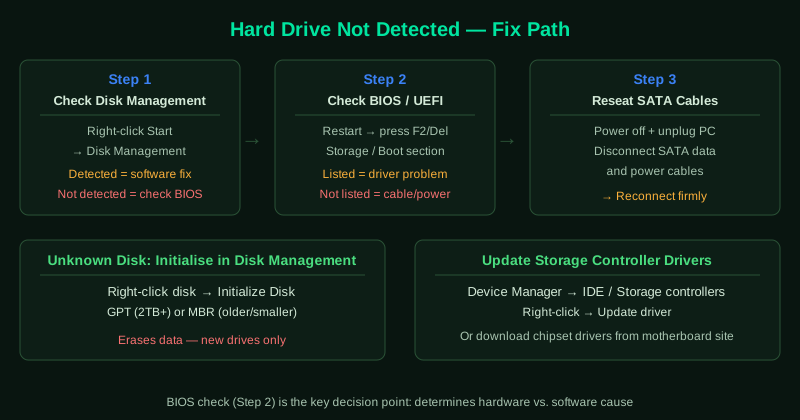
How to fix hard drive not detected
Work through the steps in order. Start with step 1 (Disk Management) to determine whether the problem is software or hardware — this determines which remaining steps are relevant.
How to verify the fix
After applying each step, open Disk Management and check whether the hard drive now appears with a healthy partition and a drive letter.
Known limitations
Microsoft’s Disk Management and Diskpart tools cannot repair a hard drive with physical damage — bad sectors that cause read errors will persist after CHKDSK and cannot be fixed by software. Microsoft’s documentation also does not cover RAID configurations: a drive that is part of a hardware RAID array will not appear as a standalone disk in Disk Management and requires the RAID controller’s management software for access. Additionally, NVMe SSDs that have lost their firmware due to an interrupted update may not be detected even in BIOS — this requires a manufacturer-specific firmware recovery tool and is not addressed in Windows documentation. Open File Explorer and confirm the drive is accessible. For external drives, try browsing to a file you stored on it previously. If the drive appears but you cannot access files, run chkdsk X: /f /r from Command Prompt as administrator (replace X with the drive letter). If the drive does not appear in BIOS after reseating cables, the drive may have failed — see Seagate External Hard Drive Not Working — Fix or consult a data recovery specialist for internal drives.