
Seagate external hard drive not working covers a range of problems — the drive is not recognised by Windows, shows a device error, makes clicking sounds, or appears in Device Manager but is inaccessible. Seagate is the world’s largest hard drive manufacturer, and their external drives use the same diagnostic tools and failure modes as other mechanical hard drives. According to Seagate’s own support documentation, most recognition failures are caused by cable problems, file system corruption, or driver issues — rather than physical drive failure.
What causes a Seagate external hard drive to stop working
USB cable failure — Seagate’s portable drives are bus-powered over USB, making them more sensitive to cable quality than desktop drives with separate power adapters. A fraying or bent cable delivers unstable power and data connections.
File system corruption — Removing the drive without using Safely Remove Hardware while Windows is writing data corrupts the NTFS or exFAT file system. Windows cannot read the drive until the file system is repaired.
Driver conflict or corruption — The USB bridge chip inside Seagate enclosures uses a driver that can become corrupted after Windows updates or failed driver installations.
Mechanical failure — The read/write head inside the drive platter assembly fails after physical shock, years of use, or manufacturing defects. Clicking sounds and failure to spin up are indicators of mechanical failure.
Firmware bug — Some Seagate drive models have firmware issues that cause Windows 11 compatibility problems. Updating the drive firmware through SeaTools resolves these cases.
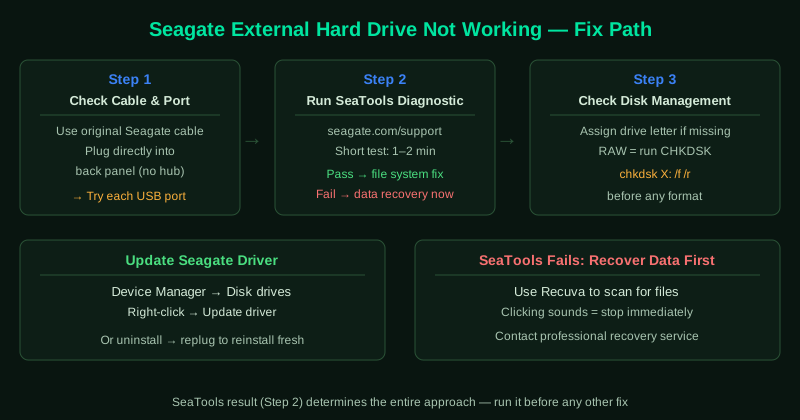
How to fix Seagate external hard drive not working
Work through the steps in order. Run SeaTools first (step 2) — a failing test result changes the entire approach from software repair to immediate data recovery.
How to verify the fix
After applying software fixes, open File Explorer and navigate to the Seagate drive.
Known limitations
SeaTools cannot repair physical damage — a failing SeaTools test result means the drive requires professional recovery, not software intervention. Seagate’s own documentation acknowledges that drives with head stack failures or platter damage have a data recovery success rate that depends entirely on the extent of physical damage, and no home tool addresses this. Additionally, certain Seagate SMR (Shingled Magnetic Recording) drive models have documented firmware bugs that cause them to stop responding after sustained write operations — these drives may recover after a full power cycle but the underlying firmware issue is not resolved by driver updates alone. Open a folder and confirm files are accessible. If you ran CHKDSK, check the completion message for the number of errors found and fixed. If no errors were found and the drive is accessible, the fix worked. If the drive continues to fail, compare your results with Seagate’s Support Knowledge Base at seagate.com/support for model-specific guidance, or contact Seagate’s support directly at 1-800-SEAGATE.