
Flash drive not recognized means you insert a USB flash drive and Windows gives no response — no connection sound, no notification in the system tray, and no new entry in File Explorer or Disk Management. The drive may or may not show an activity light. According to Microsoft’s USB troubleshooting guidance, the most common causes are a faulty USB port on the computer, a USB driver problem, or a corrupted file system on the flash drive.
What causes a flash drive not to be recognized
Faulty USB port — Individual USB ports can fail from physical wear, connector damage, or power delivery problems. A port may appear functional for some devices while failing to supply enough current for a flash drive.
Corrupted USB driver — The USB Mass Storage driver handles all USB storage devices. Corruption from an abrupt disconnection, a Windows update conflict, or another failed device installation can prevent new drives from being recognised.
File system corruption — Removing a flash drive without using Safely Remove Hardware while data is being written corrupts the file allocation table. Windows cannot mount a drive with a corrupted file system.
USB Selective Suspend — Windows power management puts inactive USB ports into a low-power state. Reconnecting a drive to a suspended port sometimes causes a recognition failure, particularly on laptops.
Drive hardware failure — Flash memory chips have a finite write cycle limit. Heavily used drives eventually develop bad sectors that prevent mounting. Physical damage from drops, water, or electrostatic discharge can cause instant failure.
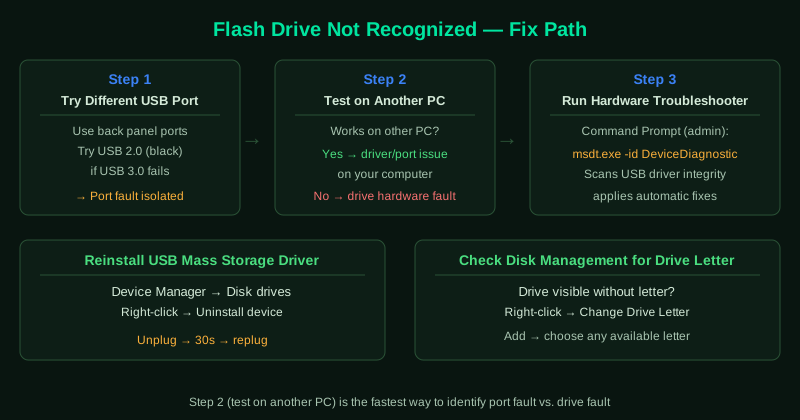
How to fix flash drive not recognized
Work through the steps in order. Step 1 (different port) and step 2 (different computer) are the fastest diagnostic checks and identify whether the problem is the port, the computer, or the drive.
How to verify the fix
After each step, remove and reinsert the flash drive.
Known limitations
Windows has no built-in tool to recover data from a flash drive with failed flash memory chips — the Hardware and Devices troubleshooter and CHKDSK both require the drive to be electrically detectable to function. If a drive is completely invisible in Device Manager, no Windows-native fix applies. Additionally, some counterfeit flash drives sold with falsified capacity labels (a 128 GB drive that physically stores only 8 GB) fail in a way that mimics file system corruption but cannot be fixed by formatting — the drive’s controller firmware is designed to misreport capacity, and no standard fix resolves this. A recognised flash drive plays the USB connection sound and appears as a lettered drive in File Explorer within a few seconds. If the drive appears in File Explorer but shows no files, your data may still be intact — run CHKDSK to repair the file system before concluding the data is lost. If the drive appears in Disk Management but not File Explorer, see USB Drive Not Recognized — Fix for drive letter assignment steps.