
USB drive not recognized means you plug in a USB flash drive or thumb drive and Windows gives no response — no sound, no notification, and no new drive in File Explorer. The drive may be completely invisible or it may appear in Disk Management without a drive letter. According to Microsoft’s troubleshooting guidance, the most common causes are a missing drive letter assignment, a corrupted file system on the drive, or a USB driver problem on the computer.
What causes a USB drive not to be recognized
Missing drive letter — Windows assigns a drive letter (like E: or F:) to each storage device. If the drive connected to your computer previously had a letter that conflicts with another device, or if the letter assignment was lost, the drive exists but is invisible in File Explorer.
Corrupted file system — An unsafe removal (pulling the drive out while files are being written) or a power interruption during a write operation can corrupt the drive’s file system. Windows cannot read a corrupted file system and may label it as RAW.
Outdated or corrupted USB Mass Storage driver — The USB Mass Storage driver handles communication between Windows and USB storage devices. If this driver is damaged, USB drives connect electrically but fail to appear in the operating system.
Incompatible file system — A drive formatted on Linux (ext4), macOS (HFS+), or certain cameras may be unreadable by Windows without additional software.
Physical damage or wear — Flash drives have a limited number of write cycles. Heavily used or older drives may develop read errors that prevent Windows from mounting them.
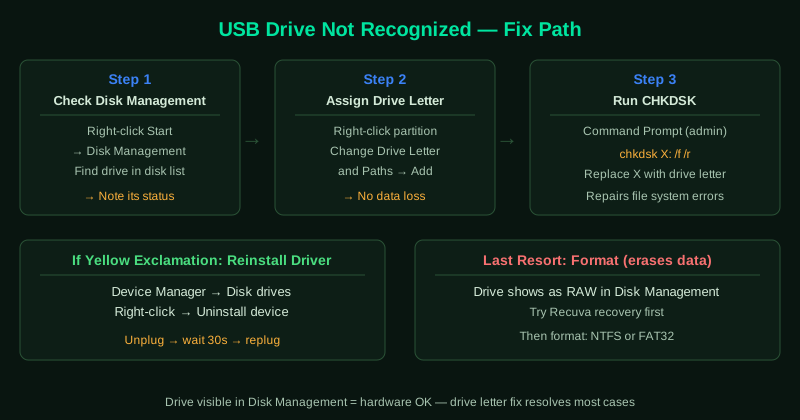
How to fix USB drive not recognized
Work through the steps in order. Steps 1 and 2 resolve the majority of cases where the drive hardware is functional.
How to verify the fix
After applying each step, unplug the drive, wait 10 seconds, and plug it back in.
Known limitations
Microsoft’s documentation does not cover drives formatted with Linux file systems (ext4, Btrfs) or macOS HFS+ — Windows cannot read these without third-party software such as Paragon extFS or HFSExplorer, and no built-in Windows fix resolves this. Similarly, drives that have exceeded their flash memory write cycle limit will fail CHKDSK and cannot be repaired by any software method — the hardware is worn out. Recovery software can sometimes extract files from such drives, but the drive itself is not salvageable. If the drive appears in File Explorer with the correct capacity shown, the fix worked. If you can see the drive but cannot open files on it, run CHKDSK as described in step 3. If the drive does not appear at all and none of the steps above helped, see USB Device Not Recognized — Fix for driver-level and hardware-level troubleshooting.