
USB Device Not Recognized is a Windows error notification that appears in the system tray when you plug in a USB device — a flash drive, phone, external hard drive, or camera — and Windows cannot communicate with it. The device does not appear in File Explorer, and an error balloon reads “USB Device Not Recognized: The last USB device you connected to this computer malfunctioned and Windows does not recognize it.” According to Microsoft’s official documentation, the most common causes are a corrupted USB driver, a power delivery problem, or a fault in the USB port itself.
What causes USB Device Not Recognized
Corrupted USB driver — The USB driver stored in Windows has become corrupted or outdated. This can happen after a Windows update, a failed driver installation, or an abrupt disconnection of a USB device mid-transfer.
USB Selective Suspend — A Windows power-saving feature that cuts power to inactive USB ports. When a device is reconnected to a suspended port, Windows sometimes fails to re-establish communication and reports the device as unrecognized.
Insufficient USB port power — Desktop computers with many USB devices connected simultaneously, and laptops on battery-saving modes, sometimes deliver less power than a device requires. External hard drives are particularly susceptible.
Faulty USB port or cable — Physical damage or wear on a USB port or cable causes intermittent connections. Windows interprets the unstable signal as an unrecognized device.
Device-specific driver missing — Some USB devices require a manufacturer-provided driver that Windows does not include by default. Without it, Windows cannot identify or use the device.
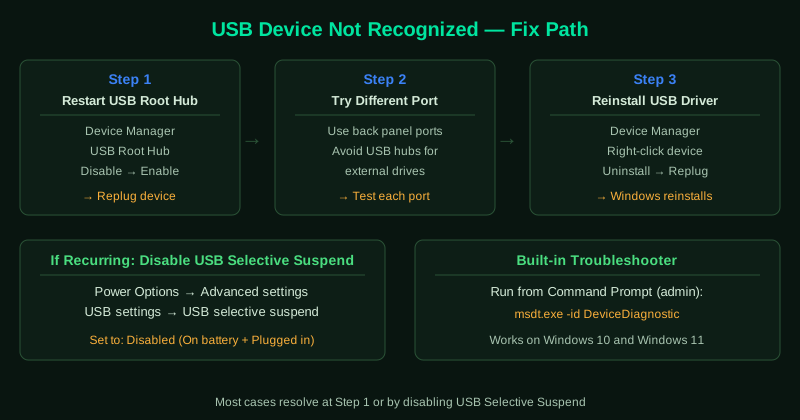
How to fix USB Device Not Recognized
Work through the steps in order. Most users resolve this at step 1, 2, or 4.
How to verify the fix
After applying each step, unplug the USB device, wait 10 seconds, and plug it back in.
Known limitations
Microsoft’s official USB troubleshooting documentation does not cover every hardware configuration. USB 3.2 Gen 2 ports on certain motherboards have known compatibility issues with older USB 2.0 devices that Microsoft has not formally documented — in these cases, using a USB 2.0 hub as an intermediary can resolve the problem. Additionally, USB devices with proprietary encryption chips (certain hardware security keys and encrypted drives) may not follow standard driver reinstall procedures and require manufacturer-specific software to re-establish recognition after a driver reset. If Windows plays the device-connected sound and the device appears in File Explorer within 5 seconds, the fix worked. If the device appears in Device Manager without a yellow exclamation mark but still does not show in File Explorer, see USB Drive Not Recognized — Fix for drive letter and file system issues.