
Speakers not working on PC means the speakers are connected and powered but produce no sound, distorted audio, or only one channel works. According to Microsoft’s official audio troubleshooting documentation, the most common causes are the wrong output device selected in Sound settings, a corrupted audio driver, or audio enhancements that conflict with the speaker hardware.
What causes speakers not to work on PC
Wrong output device selected — Windows 11 switches the default audio output automatically when new devices are connected. Speakers may stop receiving audio after connecting headphones, a Bluetooth speaker, or an HDMI monitor with built-in speakers.
Faulty cable or audio jack — 3.5mm audio cables are prone to internal wire breaks from bending, particularly near the connectors. A partially broken cable may produce intermittent or one-sided audio.
Audio enhancements conflict — Windows applies signal processing effects (bass boost, virtual surround, loudness equalization) to audio output. These effects can cause distortion or silence on certain motherboard audio hardware combinations.
Outdated or corrupted audio driver — Windows Update sometimes replaces manufacturer-specific audio drivers with generic versions. Generic drivers may not correctly handle the speaker output configuration on specific motherboards.
Disabled audio device — Speakers can be disabled in Windows Sound settings or Device Manager, either manually or by certain software installations, causing them to disappear from the output device list.
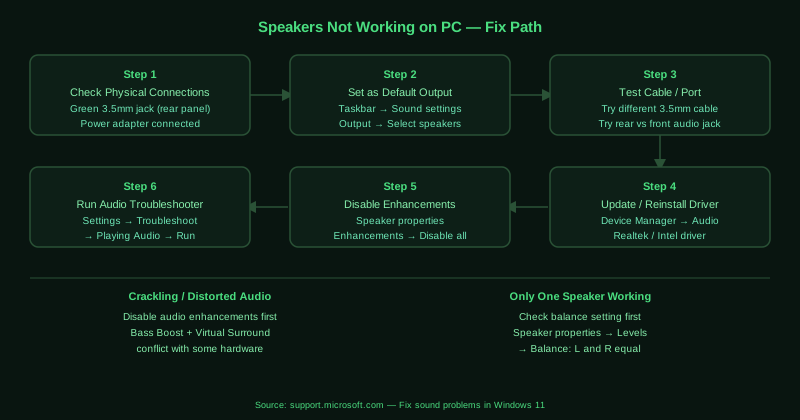
How to fix speakers not working on PC
Work through the steps in order. Step 1 (physical check) and step 2 (output device selection) resolve the majority of cases.
How to verify the fix
After each step, play audio through a browser or media player. If sound comes from both speakers at normal volume without distortion, the fix worked. To confirm the balance is correct, right-click the speaker icon, go to Sound settings, click your speakers, then Additional device properties, then the Levels tab, and click Balance — both channels should show equal values.
Known limitations
Windows audio troubleshooting tools cannot detect blown speaker drivers, failed crossover circuits, or broken speaker cones — physical hardware faults that cause permanent distortion or silence. If all software fixes fail and the speakers produce no sound on any device they are tested on, the speakers have a hardware fault. Additionally, some budget PC speakers have no driver at all and rely entirely on the motherboard audio chip — if the motherboard audio chip fails, no software fix restores audio to these speakers.