Microsoft Teams not working means the application fails to perform its core functions — messages won’t send, meetings won’t load, or the app behaves erratically — despite appearing to open normally. According to Microsoft’s official Teams troubleshooting documentation, the most common causes are an expired authentication token, a corrupted local cache, an outdated Teams version, or a Microsoft 365 service incident.
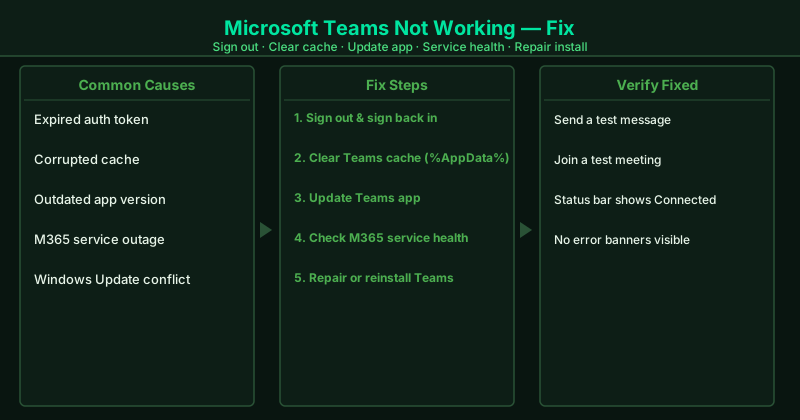
What causes Microsoft Teams to stop working
Authentication token expiry or corruption — Teams authenticates through Microsoft 365. When the stored token expires or becomes corrupted — which can happen after a long idle period, a network change, or an OS update — Teams loses its connection to Microsoft’s backend and stops functioning. Signing out and back in forces a fresh token.
Cache corruption — Teams stores significant amounts of data locally in %AppData%\Microsoft\Teams, including cached UI elements, downloaded files, message history fragments, and session data. When any of these become corrupted — from an abrupt shutdown, a disk write error, or a failed Teams update — Teams may fail to load content, freeze, or show blank screens.
Outdated app version — Microsoft updates Teams’ server-side infrastructure regularly. When the desktop app falls too far behind, it loses compatibility with the current API version and stops being able to send messages or join meetings, even though the app itself opens successfully.
Microsoft 365 service outage — Teams relies entirely on Microsoft’s cloud infrastructure. During a regional or global Teams outage, no local action will restore functionality. Service incidents can affect message delivery, meeting joining, file sharing, or presence — sometimes independently.
Windows Update conflicts — Major Windows Updates occasionally change system components that Teams depends on, including .NET runtime versions, security policies, or network adapter drivers. Teams may stop working immediately after a Windows Update completes, even though the update itself succeeded.
How to fix Microsoft Teams not working
Work through the steps in order. The majority of Teams failures are resolved at step 1 or step 2.
How to verify the fix
After completing each step, send a test message to a Teams contact or open a channel and post a message. Confirm the message delivers immediately without a spinning indicator. To verify meeting functionality, go to the Calendar tab and join any upcoming meeting, or create a test meeting and join it. If both message sending and meeting joining succeed, Teams is fully functional.
Frequently Asked Questions
Teams shows 'Something went wrong. Please try again later.'
'Something went wrong' is a generic Teams error that most commonly indicates an authentication problem or a Microsoft 365 service issue. Sign out of Teams completely and sign back in first — this refreshes the authentication token and clears the majority of 'Something went wrong' errors. If the error persists after signing back in, check the Microsoft 365 service health dashboard at admin.microsoft.com to see if there is an active Teams incident.
Teams was working yesterday but stopped working after a Windows Update.
Windows Updates occasionally change system components — particularly .NET runtime versions, security policies, or network adapter drivers — that Teams depends on. Run the Teams Repair function first: Settings > Apps > Installed Apps > Teams > Modify > Repair. If Repair is unavailable, reinstall Teams after the Windows Update. Also check Device Manager for any devices showing a yellow warning icon, which indicates a driver that the Windows Update may have broken.
Teams opens but I can't send messages or join meetings.
Being able to open Teams but unable to send messages or join meetings points to an authentication or network issue rather than an installation problem. Sign out and sign back in to refresh your authentication token. If that does not resolve it, check your network connection — Teams requires outbound access to Microsoft 365 endpoints on ports 80, 443, and 3478-3481. Corporate firewalls occasionally block these ports after a policy change, preventing Teams from connecting to Microsoft's servers even though the Teams app itself loads.
Microsoft Teams freezes every few minutes.
Frequent freezing is usually caused by a corrupted cache or insufficient system resources. Clear the Teams cache first (Step 2 above) — a bloated or corrupted cache causes Teams to freeze as it tries to read malformed data. If freezing continues, check Task Manager while Teams is running: if Teams RAM usage exceeds 1 GB, close other applications to free memory. On older machines with 4 GB RAM or less, Teams can exhaust available memory, causing periodic freezes.
My IT department says Teams is fine but it doesn't work on my PC.
When Teams works for your colleagues but not on your specific PC, the issue is local to your machine rather than a service-level problem. The most effective first step is to sign out of Teams, clear the cache (Step 2), and sign back in. If the problem persists, compare your Teams version to a working colleague's — an update may be pending. As a last resort, uninstall Teams, restart your PC, and reinstall from teams.microsoft.com. A fresh installation eliminates any local corruption that selective fixes may have missed.