PowerPoint not responding means the application freezes during editing, while inserting media, or during slideshow playback — the title bar shows “Not Responding” and all input is ignored. According to Microsoft’s official PowerPoint troubleshooting documentation, the most common cause is hardware acceleration interacting with outdated or incompatible graphics drivers, followed by memory exhaustion from presentations with many high-resolution images or embedded videos.
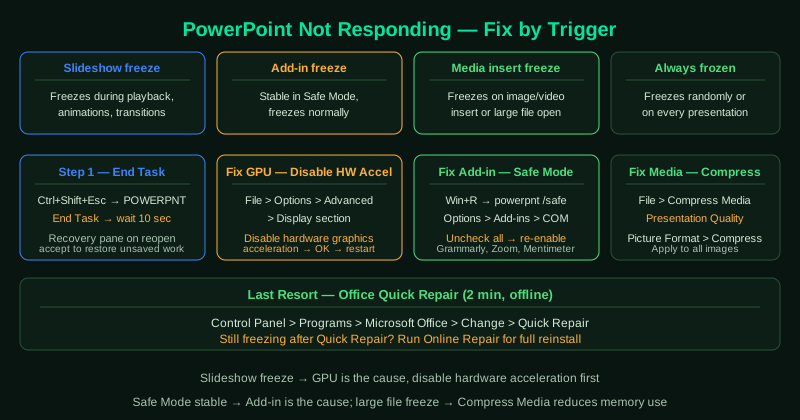
What causes PowerPoint to freeze and stop responding
Hardware acceleration and GPU driver conflict — PowerPoint uses the GPU to render animations, transitions, and video. When the graphics driver is outdated or incompatible, GPU rendering stalls and the entire application freezes. This is the leading cause of PowerPoint freezes, especially during slideshow playback.
Memory exhaustion from large media — Presentations with many high-resolution images (embedded at full size), embedded video files, or large audio clips can consume gigabytes of memory. When available memory runs out, PowerPoint freezes while trying to render or compress media.
Add-in conflict — Grammarly, Zoom, Mentimeter, and presentation management tools integrate into PowerPoint. After a PowerPoint update, these add-ins can trigger freezes when accessing the PowerPoint object model.
Corrupted slide or embedded object — A single slide containing a corrupted embedded object (OLE link, broken video reference, or malformed animation) can cause PowerPoint to freeze whenever it renders that slide.
How to fix PowerPoint not responding
Start with step 2 — disabling hardware acceleration resolves most freeze cases, especially those that occur during slideshow playback or when scrolling through slides with animations.
How to verify the fix
Open the presentation that previously caused the freeze. Run the slideshow from the beginning (press F5) and advance through all slides including any with animations or video. If PowerPoint completes the slideshow without freezing, the fix was successful.
Frequently Asked Questions
Why does PowerPoint freeze only during slideshow playback?
Slideshow playback triggers full GPU rendering for animations, transitions, and video. On systems with outdated graphics drivers or when hardware acceleration is enabled on an incompatible GPU, this causes PowerPoint to freeze mid-presentation. Disable hardware acceleration in File > Options > Advanced > Display and update your graphics driver from the manufacturer's website.
Why does PowerPoint freeze when I insert an image or video?
Inserting large media files forces PowerPoint to compress and embed the file into the presentation, which is a CPU and memory-intensive operation. For images over 5 MB, PowerPoint may appear frozen for up to 60 seconds. Wait before concluding it has crashed. For videos, use Insert > Video > This Device and choose a compressed format (MP4 with H.264) rather than uncompressed AVI or MOV files.
How do I recover a PowerPoint presentation after it freezes?
When PowerPoint reopens after a crash, it automatically shows the Document Recovery pane with autosaved versions. Select the most recent version and save it with a new name immediately. If the recovery pane does not appear, go to File > Info > Manage Presentation > Recover Unsaved Presentations. PowerPoint's AutoRecover saves a copy every 10 minutes by default.
Why does PowerPoint freeze on a specific slide but not others?
A specific slide that causes a freeze usually contains a corrupted embedded object, a broken video link, or an animation effect that conflicts with your graphics driver. Try deleting content from that slide one element at a time — start with videos and animated objects — to identify which element triggers the freeze. Replace the problematic element with a re-inserted or compressed version.
Does compressing images in PowerPoint reduce visual quality?
Compressing to Presentation Quality (220 PPI) maintains excellent visual quality for projected presentations and screen display. Web Quality (150 PPI) is acceptable for presentations viewed on screen but not printed. Email Quality (96 PPI) reduces file size the most but produces noticeably lower quality for large images. For printed handouts or large display screens, use Presentation Quality or no compression.