Zoom meeting no sound — joining a call and hearing nothing while participants are visibly talking — is almost always caused by Zoom sending audio to a different output device than the one you are listening through, or by Zoom not having joined computer audio for the current session. According to Zoom’s support documentation, selecting the correct speaker inside Zoom’s Audio settings and running the built-in speaker test resolves this in under a minute.
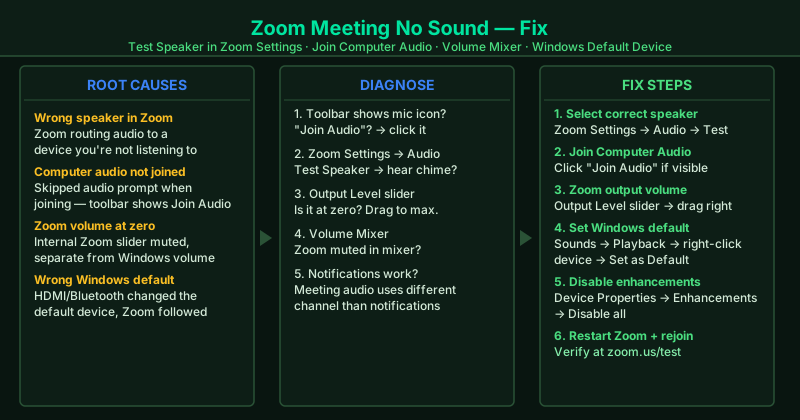
What causes no sound in Zoom meetings
Wrong speaker selected in Zoom — Zoom remembers the last audio device you used. If you plugged in new headphones, connected a USB speaker, or used a different audio output since the last meeting, Zoom may still be routing audio to the previous device — which is now disconnected or inactive.
Computer audio not joined — Zoom requires you to explicitly join computer audio at the start of each meeting. If you dismiss or skip the audio prompt when joining, you enter the meeting in a listen-only state with no audio connection at all.
Zoom volume muted or at zero — Zoom maintains its own internal volume setting independent of Windows system volume. The Zoom speaker volume can be set to zero inside the app even when the Windows volume is at 100%.
Wrong Windows default playback device — When Zoom’s speaker is set to “Same as System,” it follows the Windows default playback device. If Windows recently switched the default to a device you are not using (a TV connected via HDMI, a monitor with built-in speakers, or a recently disconnected headset), Zoom audio plays to that device instead.
Audio enhancements interference — Windows audio enhancement features — noise suppression, equalizer, virtual surround — can conflict with Zoom’s audio processing pipeline and cause meeting audio to be suppressed or silenced entirely.
How to fix Zoom meeting no sound
Work through the steps in order. Step 1 takes under 60 seconds and identifies the correct speaker for Zoom without leaving the app.
How to verify the fix
After each step, run the Speaker Test in Zoom Settings > Audio. The test chime should play through your intended output device. Then join a Zoom test meeting at zoom.us/test — select “Test Computer Audio” when prompted and confirm you can hear the recorded playback of your own voice.
Frequently Asked Questions
I can hear Zoom notifications but not meeting audio — why?
Zoom uses two separate audio channels: system notifications (which follow the Windows default playback device) and meeting audio (which uses the device selected in Zoom Settings > Audio > Speaker). If notifications play but meeting audio is silent, the meeting audio device is set incorrectly. Open Zoom Settings > Audio, click Test Speaker, and switch the Speaker dropdown to the device where you hear the notification sounds.
Zoom has no sound only on Bluetooth headphones — what should I do?
Bluetooth headphones operate in two audio profiles: A2DP (high-quality stereo, no microphone) and HFP/HSP (hands-free, enables microphone but lowers audio quality). When Zoom activates the microphone, Windows may switch the headphone to HFP mode, which some headphone models process silently before audio re-establishes. Wait 2-3 seconds after unmuting your mic. If the problem persists, set your Bluetooth headphones as the default playback device in Windows Sounds settings and restart Zoom.
Zoom had sound at the start of the meeting but it stopped mid-meeting.
Mid-meeting sound loss happens when another application claims exclusive control of your audio device, when a USB audio device is disconnected and reconnected, or when Windows changes the default audio device while the meeting is running. In the meeting, click the arrow next to the Mute button and select your speaker from the dropdown list to re-attach Zoom's audio session. If the device is no longer listed, leave and rejoin the meeting.
Other participants can hear me but I cannot hear them.
When you can transmit audio but cannot receive it, the problem is Zoom's speaker selection or Windows output volume — not a microphone issue. Run the Speaker Test in Zoom Settings > Audio (Step 1). If the test chime plays, your speaker works and the meeting audio may be muted at the host level for all participants — check with another participant. If the chime does not play, select a different speaker device in Zoom's settings.
Zoom no sound after a Windows Update.
Windows Updates sometimes reset the default audio device or change audio routing. After an update, check two things: first, verify your preferred playback device is still set as Default Device in Windows Sounds (Step 4). Second, open Zoom Settings > Audio and confirm the Speaker is still set to the correct device — Windows updates occasionally reset this to 'Same as System' which may now point to the wrong device.