Zoom microphone not working — other participants cannot hear you, or your microphone shows no input in Zoom’s audio settings — is most commonly caused by Windows blocking Zoom’s microphone access, the wrong input device being selected in Zoom, or another application holding exclusive control of the microphone. According to Zoom’s official microphone troubleshooting guide, checking the Input Level bar in Zoom’s audio settings confirms within seconds whether Zoom is receiving your audio.
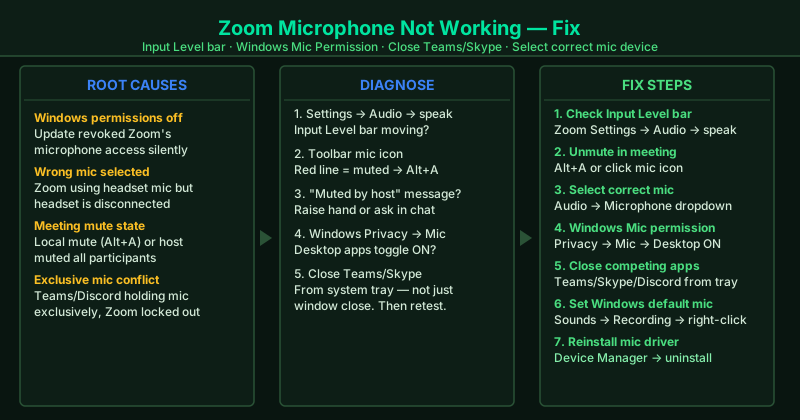
What causes the Zoom microphone to stop working
Windows microphone permissions revoked — Windows 10 and 11 control which apps can access the microphone through the Privacy & Security settings. A Windows Update, a group policy change, or a manual settings change can revoke Zoom’s microphone permission without any visible notification.
Wrong microphone device selected — Zoom stores the microphone device from the last session. If you switch from a headset to a built-in microphone, connect a new USB device, or disconnect your usual mic, Zoom continues trying to use the previously selected device — which may no longer be active.
Meeting mute state — Zoom has two separate mute controls: your local mute (Alt+A) and the host’s mute. Both must be inactive for your microphone to transmit. Being muted at the host level is a common source of confusion because the toolbar icon looks the same whether you muted yourself or the host muted you.
Exclusive microphone access conflict — Microsoft Teams, Skype, and Discord request exclusive control of the microphone when they are running. When one of these holds exclusive access, Zoom cannot initialize the same microphone and the Input Level bar shows no movement.
Corrupted audio driver — A corrupted input device driver causes the microphone to fail in all applications or specifically fail in Zoom due to driver-level permissions. Reinstalling the driver is the only fix when all other steps do not resolve the issue.
How to fix Zoom microphone not working
Work through the steps in order. Step 1 takes under 30 seconds and immediately tells you whether the problem is the device or the meeting state.
How to verify the fix
In Zoom Settings > Audio, watch the microphone Input Level bar while speaking normally. The bar should show green movement in sync with your voice. Then join the Zoom test meeting at zoom.us/test, speak for 10 seconds when prompted, and confirm you can hear your own voice played back in the recording.
Frequently Asked Questions
Zoom microphone not working after Windows Update.
Windows Updates frequently reset microphone privacy permissions. Open Settings > Privacy & Security > Microphone and confirm 'Let desktop apps access your microphone' is still turned On. Also check Device Manager > Audio inputs and outputs for a yellow warning icon on your microphone device — an update may have installed an incompatible driver. If so, roll back the driver by right-clicking the device, clicking Properties, and using the Driver tab's Roll Back Driver option.
My microphone works in Windows voice recorder but not in Zoom.
When the microphone works in other apps but not Zoom specifically, the issue is Zoom's device selection or its privacy permissions. Open Zoom Settings > Audio and manually select your microphone from the dropdown — do not leave it on 'Same as System.' Also verify Windows Privacy > Microphone shows Zoom as allowed. If Zoom is not listed individually, the 'Let desktop apps access your microphone' toggle must be On.
Zoom microphone shows a level bar moving but others still can't hear me.
If the Input Level bar in Zoom Settings > Audio moves when you speak, Zoom is receiving your audio correctly. The problem is in the meeting itself: you may be muted at the meeting level, muted by the host, or experiencing a network issue that is dropping your audio packets. First press Alt+A to unmute. If you see 'Muted by host,' use the Raise Hand button or type in chat to ask the host to unmute you. If you are unmuted but still not heard, leave and rejoin the meeting.
Zoom microphone volume is very low — others can barely hear me.
In Zoom Settings > Audio, drag the microphone Input Level slider to the right to increase the input gain. Also check 'Automatically adjust microphone volume' — this setting lets Zoom dynamically boost your mic when it detects low input. Additionally, check Windows Settings > Sound > your microphone > Device properties and increase the microphone boost or volume level there. For USB microphones, some models have a physical gain knob — turn it up.
Zoom says 'No microphone found.' How do I fix this?
'No microphone found' means Zoom cannot detect any audio input device on your system. Check Device Manager > Audio inputs and outputs to confirm your microphone appears without a warning icon. If it is missing entirely, the device may not be physically connected (for USB mics), the driver may be uninstalled, or the device is disabled. Right-click inside Device Manager and select Scan for hardware changes. For built-in laptop microphones, a recent driver update may have disabled the device — roll back the audio driver.