Zoom speaker not working — whether the speaker test plays no chime, meeting audio plays through the wrong output device, or Zoom audio disappears while everything else on your computer sounds fine — is almost always caused by the wrong output device being selected in Zoom or by Windows routing Zoom’s audio to an inactive or unexpected playback device. According to Zoom’s official audio documentation, running the built-in speaker test in Zoom Settings identifies the active device immediately.
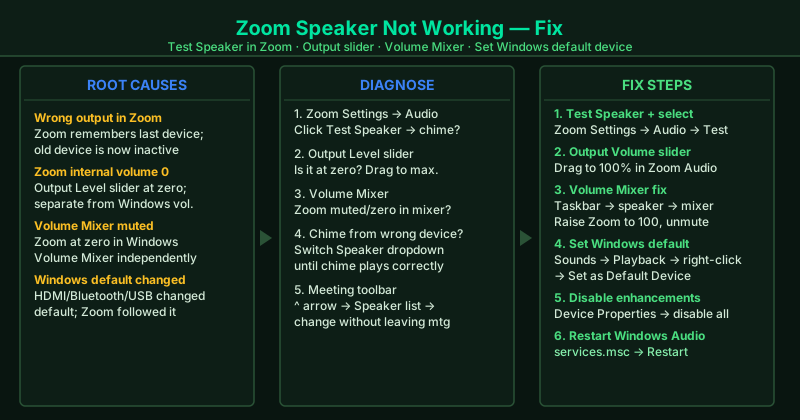
What causes the Zoom speaker to stop working
Wrong output device in Zoom — Zoom stores the speaker device from the last session. When you connect or disconnect headphones, a USB speaker, or a Bluetooth device, Windows may reassign the default audio output — but Zoom keeps using the previously remembered device, which may no longer be active.
Zoom’s internal volume at zero — Zoom has a separate speaker volume control inside its settings. This slider can be set to zero by an accidental drag or by a Zoom app update that resets audio preferences — causing complete silence even when Windows volume is at maximum.
Windows Volume Mixer muting Zoom — Windows allows individual applications to be muted independently of system volume. Zoom appearing at zero or muted in the Volume Mixer produces complete silence without any indication inside the Zoom app itself.
Wrong Windows default playback device — Connecting an HDMI monitor, TV, Bluetooth device, or USB speaker causes Windows to automatically switch the default playback device. When Zoom uses “Same as System,” it follows this change and begins playing audio through the newly connected device instead of your usual speakers.
Windows Audio service failure — The Windows Audio service manages all audio routing. When it enters an error state, audio output stops across all applications. Restarting the service restores function without requiring a system reboot.
How to fix Zoom speaker not working
Work through the steps in order. Step 1 takes under 60 seconds and directly identifies whether Zoom is using the correct output device.
How to verify the fix
Run the speaker test in Zoom Settings > Audio — you should hear the chime through your intended output device. Then join a test meeting at zoom.us/test and confirm you can hear the recorded playback of your voice, which confirms the speaker is working end-to-end in a live Zoom session.
Frequently Asked Questions
Zoom speaker test plays sound but I still can't hear meeting audio.
If the speaker test plays but meeting audio is silent, you have not joined computer audio for the current session. Look at the meeting toolbar — if you see 'Join Audio' instead of a microphone icon, click it and select Computer Audio. Alternatively, the meeting host may have muted all participants' incoming audio streams, which is less common but possible in large webinars. Check with another participant to confirm whether they can hear meeting audio.
Zoom is playing audio through my monitor speakers instead of my headphones.
This is a Windows default playback device issue. When you plugged in your headphones, Windows may not have switched the default device automatically. Right-click the speaker icon in the taskbar > Sounds > Playback tab. Right-click your headphones and select Set as Default Device and Set as Default Communication Device. Then reopen Zoom Settings > Audio and set the Speaker dropdown to your headphones explicitly rather than 'Same as System.'
Zoom speaker worked this morning but stopped working after I connected a Bluetooth device.
Connecting a Bluetooth device — headphones, speaker, or earbuds — causes Windows to switch the default playback device to the new Bluetooth device. Zoom follows this change when its speaker is set to 'Same as System.' If you then disconnect the Bluetooth device, Windows may switch the default to a different device than expected. Open Zoom Settings > Audio and manually select your intended speaker instead of leaving it on 'Same as System.'
Zoom speaker not working on a laptop — built-in speakers produce no Zoom audio.
On laptops, the built-in speakers can be overridden by a connected device even after that device is disconnected if the driver did not properly reset. Right-click the speaker icon > Sounds > Playback tab and verify the built-in laptop speakers are listed, not disabled (shown with a down arrow icon), and set as Default Device. If the built-in speakers show as Disabled, right-click them and select Enable.
How do I change the Zoom speaker during a meeting without opening settings?
In an active Zoom meeting, click the small arrow (^) next to the Mute button on the toolbar. A menu appears showing all available audio devices. Under Speaker, select the output device you want Zoom to use. The change takes effect immediately without leaving the meeting or opening the full settings panel.