Restoring your computer to an earlier date means rolling Windows back to exactly how it was configured on a specific day — the same programs installed, the same drivers, the same registry settings. It is the most direct way to undo a change that broke something, whether that was a Windows Update, a new driver, or software you installed.
The process uses a restore point saved on or before the date you want to return to. Windows creates these automatically before major changes, so there is usually a usable restore point close to when the problem began.
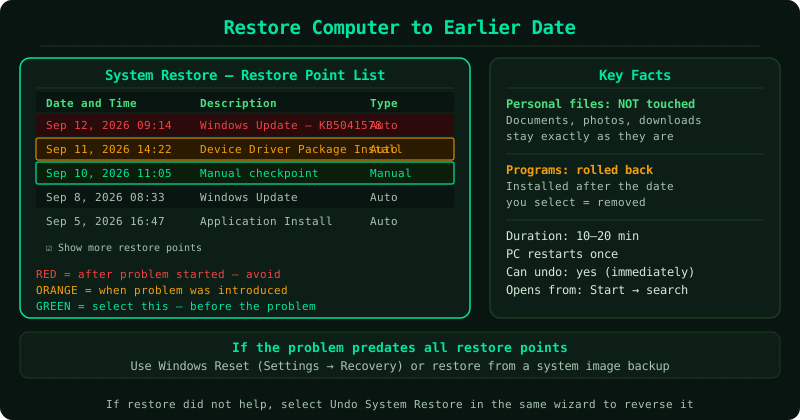
What changes and what stays the same
Changes back to the earlier date: Installed programs, device drivers, Windows system files, and registry settings. Any software installed after the restore point date is removed.
Stays the same (not affected): All personal files — documents, photos, music, videos, downloads. These are completely untouched regardless of how far back you restore.
How to verify the fix
After the restore completes and your computer restarts, confirm the specific problem is gone. Open the application that was crashing, reproduce the steps that triggered the error, or check the settings that had changed. If the issue is resolved, the restore reached the right date. If it persists, the problem predates the restore point you chose — run System Restore again and select an older restore point. If no suitable restore point exists, see Windows Backup and Restore for full system image recovery options.
Frequently Asked Questions
How far back can I restore my computer?
You can restore to any date for which a restore point exists. Windows keeps restore points until the allocated disk space runs out, at which point the oldest points are deleted automatically. On most systems this means several weeks to a few months of history, though the range varies depending on how much space was allocated to System Protection and how frequently restore points were created. To see the oldest available date, check the Show more restore points box in the System Restore wizard and look at the bottom of the list.
Will restoring to an earlier date delete my documents?
No. System Restore does not affect personal files including documents, spreadsheets, photos, videos, music, downloads, or browser bookmarks. It only changes system files, the registry, and installed programs. Any document you created after the restore point date remains on your computer exactly as it is. Only programs and drivers installed after the restore point date are removed.
Can I restore to a date before Windows was updated?
Yes, if a restore point was created before the update was applied. Windows automatically creates a restore point immediately before applying Windows Updates, so there should be a restore point from just before any update. Select that restore point and the update is uninstalled as part of the restore. The update may reinstall automatically the next time Windows checks for updates — to prevent this, you can pause Windows Update temporarily from Settings → Windows Update → Pause updates.
The date I need is not in the restore point list — what can I do?
If no restore point exists for the date you need, System Restore cannot reach that point in time. The next options are: if you have a system image backup from around that date, you can restore the entire system from it (see the Windows Backup and Restore guide). If the problem is related to personal files rather than system configuration, File History may have earlier versions of those files. If no backup exists, the only way to go back further is a full Windows reset.
Why does my computer show no restore points at all?
Restore points are only created when System Protection is turned on. If System Protection was disabled (by a disk cleanup tool, IT administrator policy, or during a Windows Reset), no restore points were saved. Open System Properties by searching 'Create a restore point', check the Protection column next to the C: drive — if it shows Off, System Protection was not running. You can enable it going forward, but this does not create retroactive restore points for dates when it was off.